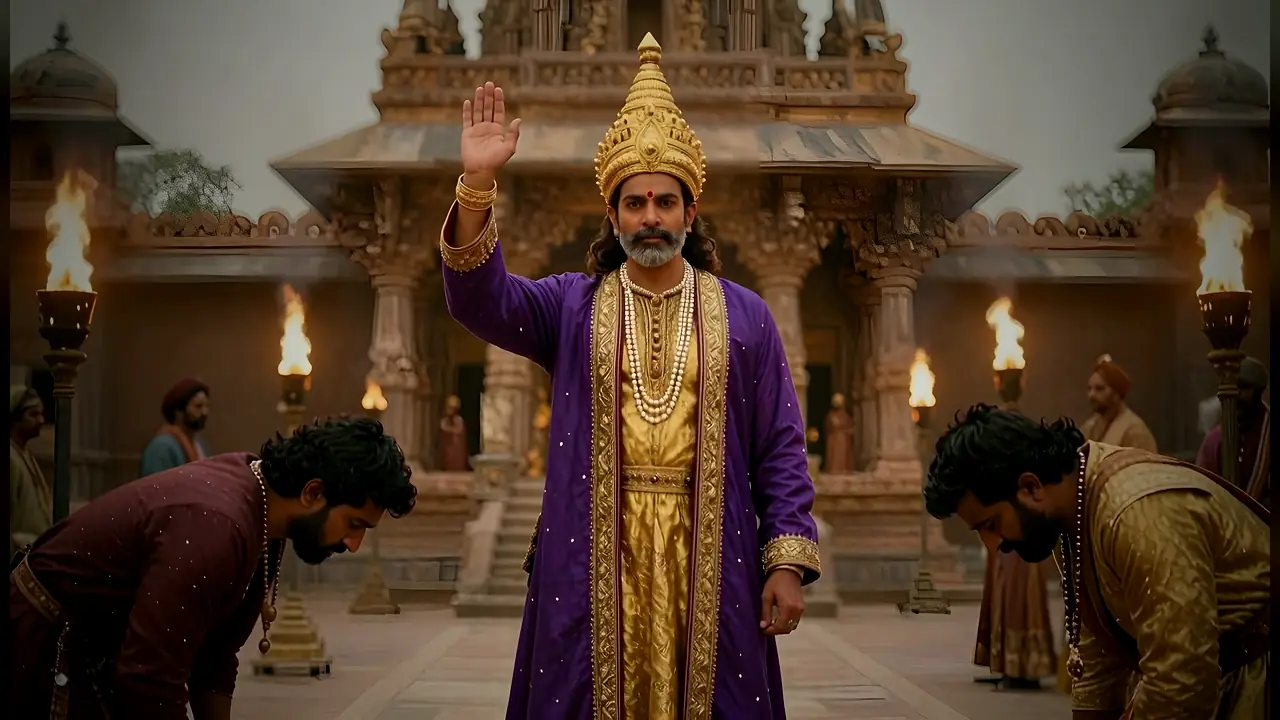
On one Diwali night, a king gave an order no one in his kingdom could understand. Not one lamp was to be lit. Not in the market, not in the temples, not even in his own palace. On the darkest night of the year, only one house would glow: the small hut of a poor washerwoman by the river.
एक दिवाली की रात, एक राजा ने ऐसा आदेश दिया जिसे उसके राज्य में कोई समझ नहीं पाया। एक भी दीया नहीं जलेगा। न बाज़ार में, न मंदिरों में, न ही उसके अपने महल में। साल की सबसे अँधेरी रात में, सिर्फ़ एक घर जगमगाएगा: नदी किनारे एक गरीब धोबिन की छोटी सी झोंपड़ी।
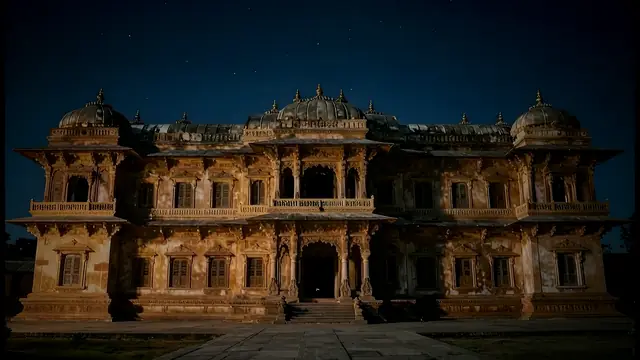
Diwali is the night of Goddess Lakshmi, who comes only to homes that are lit. So why would a king leave his whole kingdom dark, on her own night? And that was not the only lamp lit for a secret reason on this night. Tonight, we follow three of them.
दिवाली माँ लक्ष्मी की रात है, जो बस रोशन घरों में आती हैं। तो कोई राजा उन्हीं की रात पूरा राज्य अँधेरे में क्यों रखेगा? और उस रात किसी गुप्त कारण से जला ये अकेला दीया नहीं था। आज हम ऐसे तीन दीयों की कथा सुनेंगे।
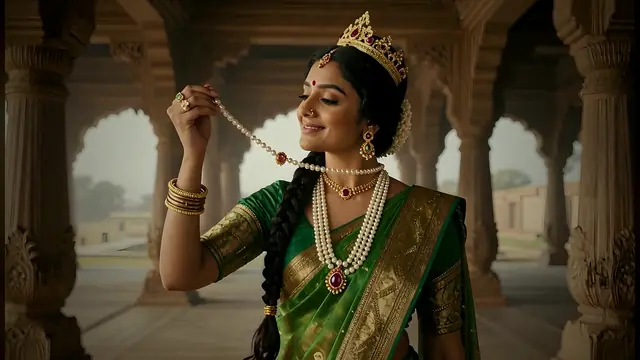
The first story is one grandmothers tell, and it begins with a necklace. The queen of that kingdom had a necklace of pearls, the most precious thing she owned. One morning she went down to the river to bathe, took it off, and laid it on the steps.
पहली कथा दादी-नानी सुनाती हैं, और ये एक हार से शुरू होती है। उस राज्य की रानी के पास मोतियों का एक हार था, उसकी सबसे कीमती चीज़। एक सुबह वो नदी में स्नान करने गई, हार उतारा, और घाट की सीढ़ियों पर रख दिया।
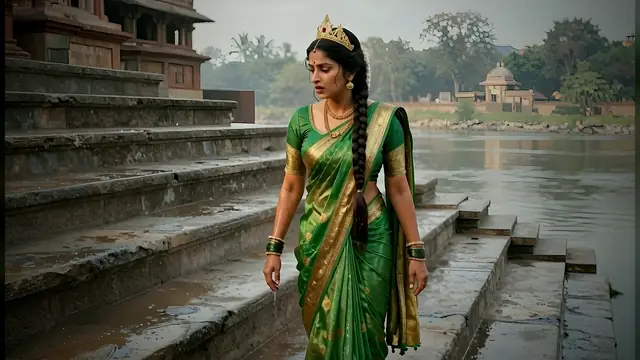
A crow saw it shining. It swooped down, caught the necklace in its beak, and flew away over the rooftops. By the time the queen came out of the water, it was gone.
एक कौए ने उसे चमकते देखा। वो झपटा, हार को अपनी चोंच में पकड़ा, और छतों के ऊपर से उड़ गया। जब तक रानी पानी से बाहर आई, हार जा चुका था।
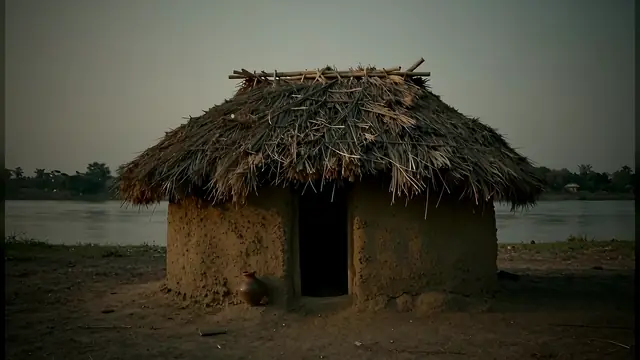
Far from the palace, on the same river, lived a washerwoman. All day she stood in the water, beating clothes on a stone. She was so poor that on most nights her hut stayed dark. And that evening, as she walked home, something fell from the sky and landed at her feet.
महल से दूर, उसी नदी के किनारे, एक धोबिन रहती थी। दिन भर वो पानी में खड़ी होकर पत्थर पर कपड़े पीटती थी। वो इतनी गरीब थी कि ज़्यादातर रातों में उसकी झोंपड़ी में अँधेरा रहता था। और उस शाम, जब वो घर लौट रही थी, आसमान से कुछ गिरा और उसके पैरों के पास आ गिरा।
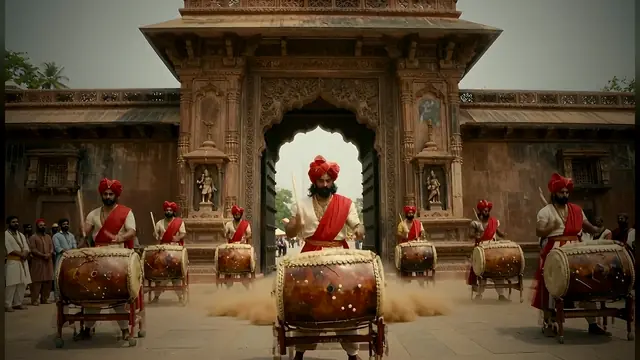
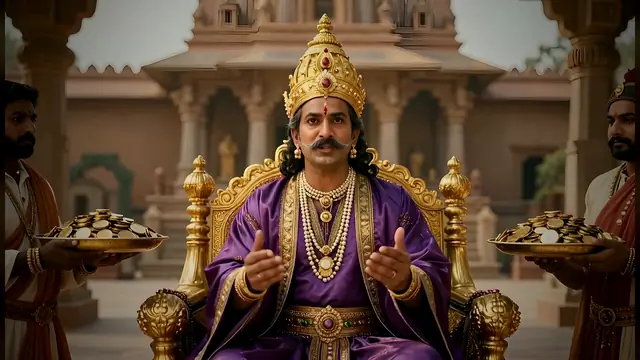
It was the queen's necklace. The crow had dropped it. She held in her hands more wealth than she would earn in her whole life. And then she heard the palace drums. Whoever returned the necklace, the king announced, could ask for any reward.
वो रानी का हार था। कौए ने उसे गिरा दिया था। उसके हाथों में इतना धन था, जितना वो पूरी उम्र में न कमा पाती। और तभी उसने महल के नगाड़े सुने। राजा ने घोषणा की थी: जो हार लौटाएगा, वो कोई भी इनाम माँग सकता है।
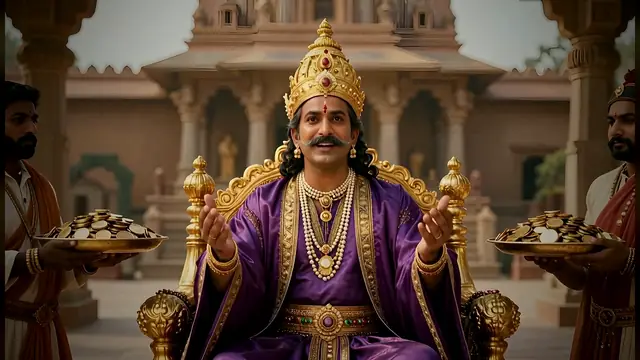
She could have sold it and never been poor again. Instead, the next morning, she walked to the palace and placed it in the queen's hands. Ask for anything, the king said. Gold, land, a house of your own.
वो उसे बेचकर हमेशा के लिए गरीबी से छूट सकती थी। पर अगली सुबह, वो महल गई और हार रानी के हाथों में रख दिया। कुछ भी माँगो, राजा ने कहा। सोना, ज़मीन, अपना एक घर।
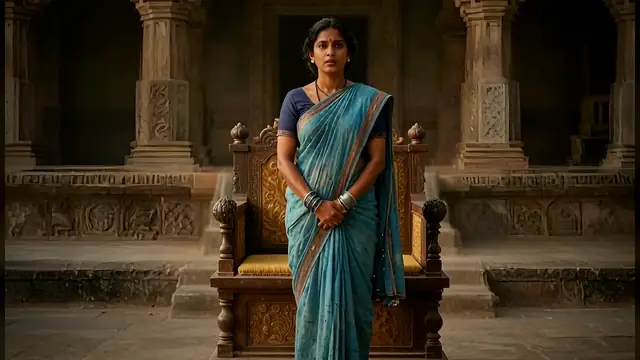
She shook her head. I want only one thing, she said. On Diwali night, let no one in your kingdom light a lamp. No one except me.
उसने सिर हिलाया। मुझे बस एक चीज़ चाहिए, उसने कहा। दिवाली की रात, आपके राज्य में कोई दीया न जलाए। मेरे सिवा कोई नहीं।
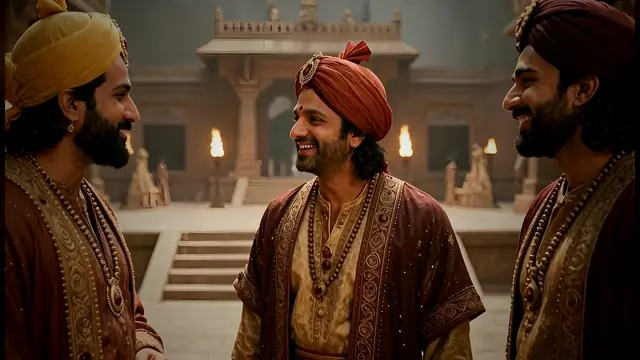
The ministers laughed. But a king's word, once given, cannot be taken back. So the order went out: on Diwali night, every lamp must stay dark. And on Diwali eve, the washerwoman spent everything she had on oil and clay lamps, and placed one in every corner of her hut.
मंत्री हँस पड़े। पर राजा का दिया वचन वापस नहीं लिया जा सकता। तो आदेश निकला: दिवाली की रात, हर दीया बुझा रहेगा। और दिवाली की पूर्व संध्या पर, धोबिन ने अपना सब कुछ तेल और मिट्टी के दीयों पर खर्च कर दिया, और अपनी झोंपड़ी के हर कोने में एक दीया रख दिया।
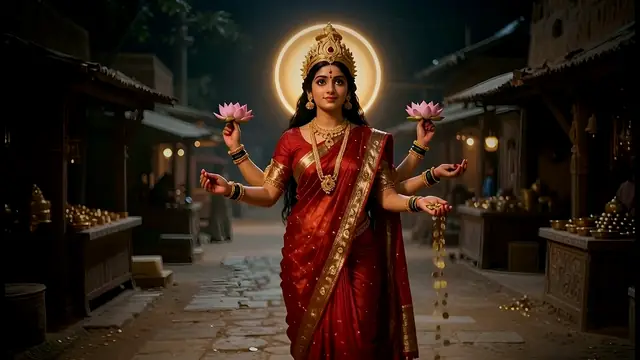
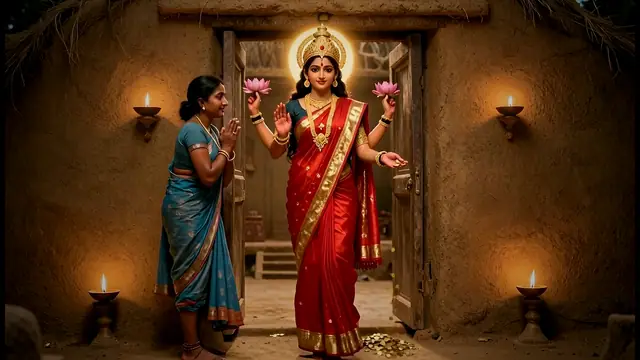
Then night fell, and Goddess Lakshmi came down to the earth to bless the homes that welcome her. But the kingdom was black. The market, dark. The temples, dark. The palace, doors shut, every window black. And far away by the river, one glowing hut. Lakshmi knocked. And the washerwoman did not open the door.
फिर रात हुई, और माँ लक्ष्मी स्वागत करने वाले घरों को आशीर्वाद देने धरती पर उतरीं। पर राज्य अँधेरे में डूबा था। बाज़ार, अँधेरा। मंदिर, अँधेरे। महल, द्वार बंद, हर खिड़की काली। और दूर नदी किनारे, एक जगमगाती झोंपड़ी। माँ लक्ष्मी ने द्वार खटखटाया। और धोबिन ने द्वार नहीं खोला।
I will let you in, Mother, she said, on one condition. Promise me that you will never leave my home. That was her real reward. Not gold. The goddess herself. And Lakshmi, who had found only one lit door in the whole kingdom, gave her word.
माँ, मैं आपको भीतर आने दूँगी, उसने कहा, बस एक शर्त पर। वचन दीजिए कि आप मेरा घर कभी नहीं छोड़ेंगी। यही उसका असली इनाम था। सोना नहीं। स्वयं देवी। और पूरे राज्य में एक ही रोशन द्वार पाने वाली माँ लक्ष्मी ने वचन दे दिया।
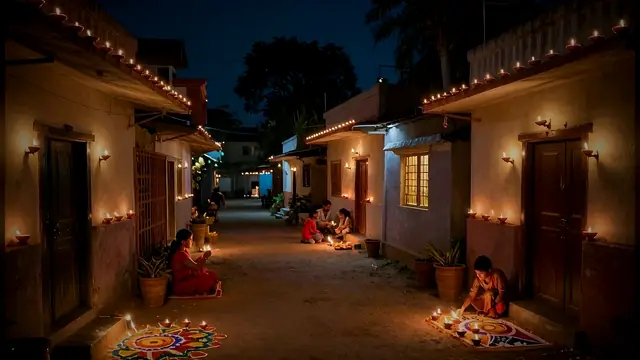
As Lakshmi stepped in through the front door, someone slipped out through the back. Alakshmi, the goddess of misfortune, who had lived in that hut for years, walked away into the dark. And that is why, on this night, homes are swept clean, lit in every corner, and their doors left open, so that Lakshmi will not pass us by.
जैसे ही माँ लक्ष्मी आगे के द्वार से भीतर आईं, कोई पीछे के द्वार से निकल गया। अलक्ष्मी, दुर्भाग्य की देवी, जो बरसों से उस झोंपड़ी में रहती थीं, अँधेरे में चली गईं। और इसीलिए, इस रात घरों को साफ़ किया जाता है, हर कोने में दीये जलाए जाते हैं, और द्वार खुले रखे जाते हैं, ताकि माँ लक्ष्मी हमारे घर के आगे से न लौटें।
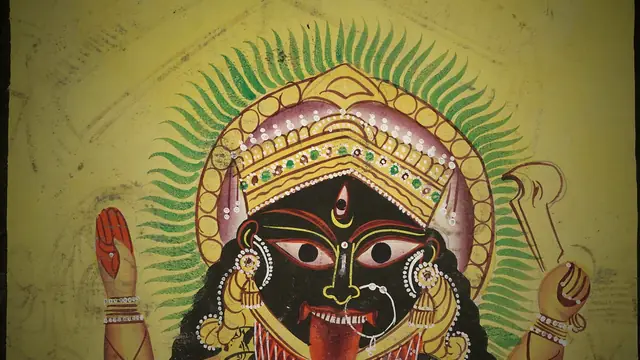
Tomorrow's story is Kali's night.
कल की कथा माँ काली की रात की है।
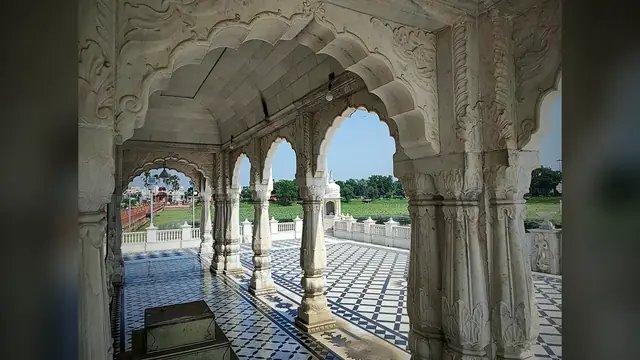
The second lamp was lit in Bihar, on this same dark night of Kartika. Jain tradition places it more than two thousand five hundred years ago. And it was lit not to welcome someone, but because a great light had left the world.
दूसरा दीया बिहार में जला, कार्तिक की इसी अँधेरी रात को। जैन परंपरा इसे ढाई हज़ार साल से भी पहले का मानती है। और ये किसी के स्वागत में नहीं जला, बल्कि इसलिए, कि एक महान ज्योति संसार से चली गई थी।
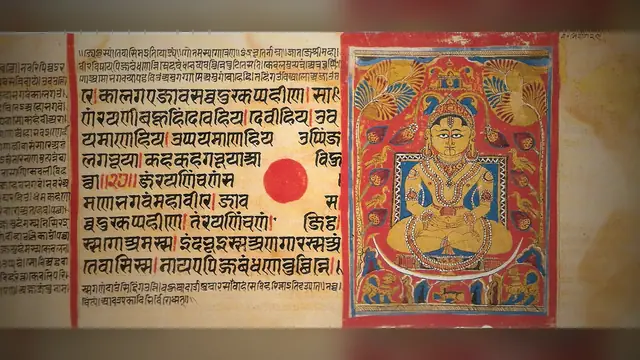
At Pava, the place Jains honour today as Pawapuri, Bhagwan Mahavira, the all-knowing, the twenty fourth Tirthankara of our age, spent his last days. Jain tradition says that in his final hours he taught without stopping, and his last teachings are treasured to this day as the Uttaradhyayana Sutra.
पावा में, जिसे जैन आज पावापुरी के रूप में पूजते हैं, सर्वज्ञ भगवान महावीर, इस युग के चौबीसवें तीर्थंकर, अपने अंतिम दिन बिता रहे थे। जैन परंपरा कहती है कि अपने अंतिम समय में वे निरंतर उपदेश देते रहे, और उनकी अंतिम वाणी आज भी उत्तराध्ययन सूत्र के रूप में संजोई गई है।
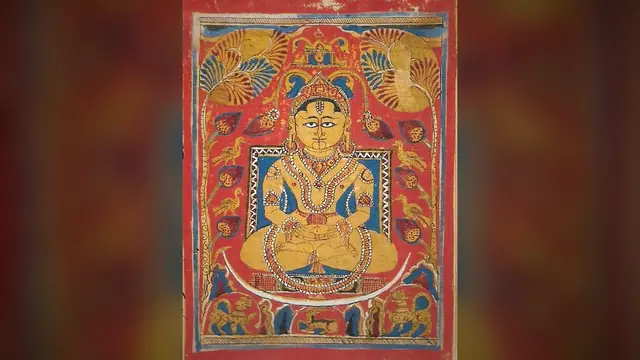
But his closest disciple was not there. Gautama Swami loved his master more than anything in the world. And that love, Bhagwan Mahavira knew, was the last bond holding Gautama back. So on that last day, he sent Gautama to a nearby village, to teach a man named Devasharma.
पर उनके सबसे प्रिय शिष्य वहाँ नहीं थे। गौतम स्वामी अपने गुरु से संसार में सबसे अधिक प्रेम करते थे। और भगवान महावीर जानते थे कि यही प्रेम गौतम स्वामी का अंतिम बंधन है। इसलिए उस अंतिम दिन, उन्होंने गौतम स्वामी को पास के एक गाँव में देवशर्मा नाम के एक व्यक्ति को उपदेश देने भेजा।
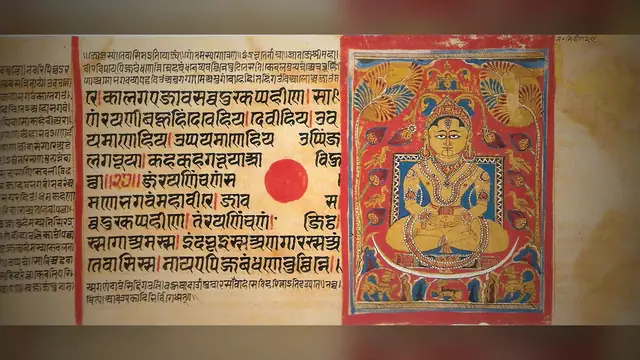
In the last part of the night, Bhagwan Mahavira attained nirvana, and his soul rose, freed forever, to the abode of the liberated.
रात के अंतिम पहर में, भगवान महावीर ने निर्वाण प्राप्त किया, और उनकी आत्मा सदा के लिए मुक्त होकर सिद्धों के लोक में पहुँच गई।
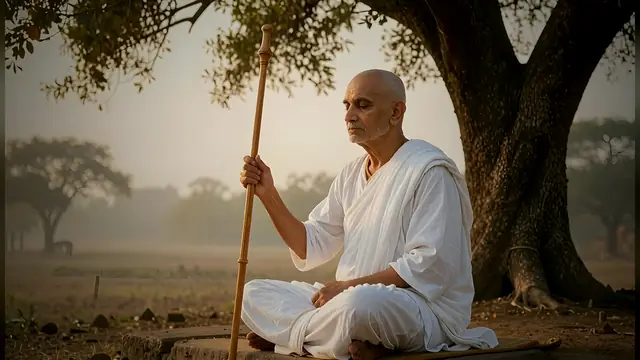
Gautama Swami heard the news on his way back, and he wept. Why did my Lord send me away, on his last day? And then, Jain tradition says, he understood. Even his love for his master had been a bond. In that moment it fell away, and Gautama Swami attained perfect knowledge, that same night.
लौटते समय रास्ते में गौतम स्वामी ने यह समाचार सुना, और वे रो पड़े। मेरे प्रभु ने अपने अंतिम दिन मुझे दूर क्यों भेजा? और तब, जैन परंपरा कहती है, वे समझ गए। अपने गुरु से उनका प्रेम भी एक बंधन था। उसी क्षण वो बंधन टूट गया, और गौतम स्वामी ने उसी रात केवल ज्ञान प्राप्त किया।
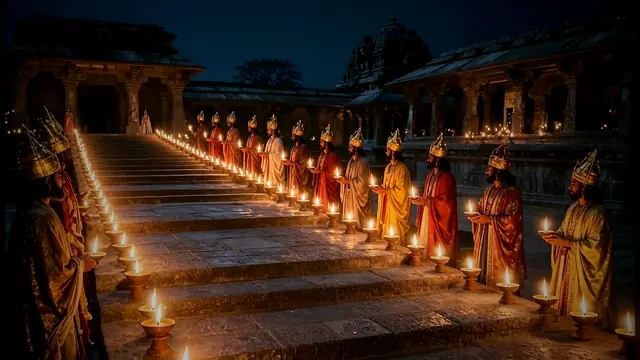
Eighteen kings of Kashi and Kosala, the nine Mallas and the nine Licchavis, were keeping a fast that night. The Kalpa Sutra records their words. Since the light of intelligence is gone, they said, let us make an illumination of material matter. An inner light had gone, so they lit outer ones. For Jains, this is why the lamps of Diwali are lit.
उस रात काशी और कोसल के अठारह राजा, नौ मल्ल और नौ लिच्छवि, उपवास कर रहे थे। कल्पसूत्र उनके शब्द लिखता है। उन्होंने कहा, ज्ञान का प्रकाश चला गया है, तो आओ, भौतिक प्रकाश करें। भीतर की ज्योति गई, तो उन्होंने बाहर दीये जलाए। जैनों के लिए, इसीलिए दिवाली के दीये जलते हैं।
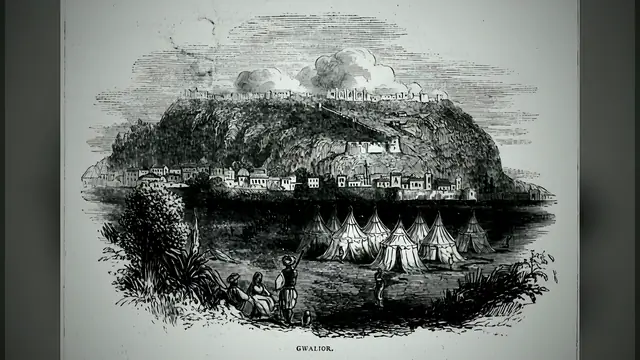
The third lamp was lit in Amritsar, and it began in a prison. In the seventeenth century, Guru Hargobind Sahib Ji, the sixth Guru, who carried the same divine light as Guru Nanak, was held in the fort of Gwalior on the emperor's orders. With him were fifty two kings.
तीसरा दीया अमृतसर में जला, और इसकी कथा एक कैद से शुरू होती है। सत्रहवीं सदी में, छठे गुरु, गुरु हरगोबिंद साहिब जी, जिनमें गुरु नानक की वही दिव्य ज्योति थी, बादशाह के आदेश से ग्वालियर के किले में बंदी थे। उनके साथ बावन राजा थे।
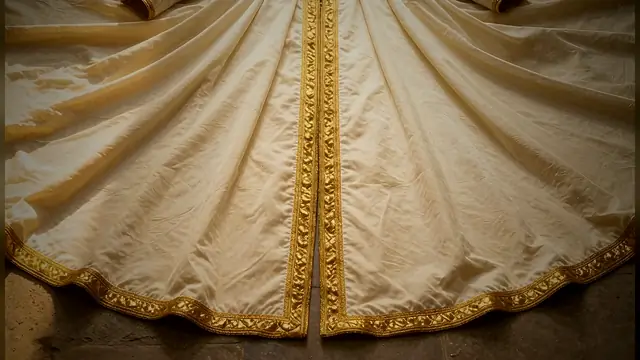
When the emperor agreed to set the Guru free, the Guru would not leave alone. So the emperor set one condition. Only those who could hold on to the Guru's robe as he walked out could go free.
जब बादशाह गुरु जी को मुक्त करने को राज़ी हुआ, तो गुरु जी अकेले जाने को तैयार नहीं हुए। तब बादशाह ने एक शर्त रखी। सिर्फ़ वही आज़ाद हो सकते थे, जो बाहर जाते समय गुरु जी का चोला पकड़ सकें।
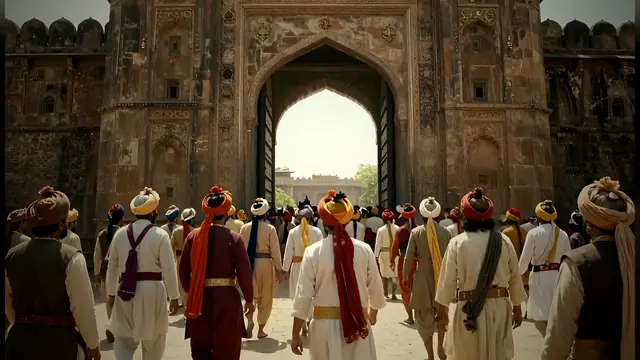
The Guru had a robe made with fifty two panels. Each king took hold of one. And all fifty two walked out of Gwalior free. That is why Sikhs remember him as Data Bandi Chhor, the giver of freedom.
गुरु जी ने बावन कलियों वाला चोला बनवाया। हर राजा ने एक कली पकड़ी। और बावन के बावन राजा ग्वालियर से आज़ाद होकर निकले। इसीलिए सिख उन्हें दाता बंदी छोड़ के रूप में याद करते हैं, मुक्ति के दाता।
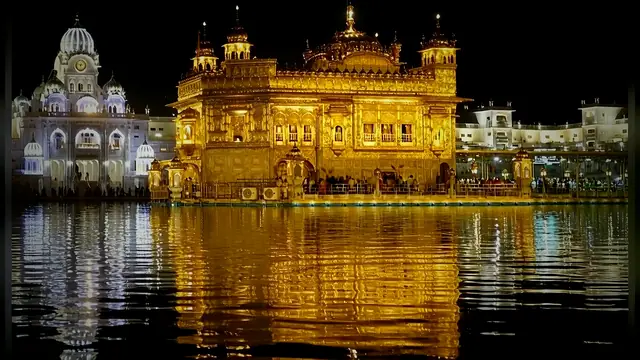
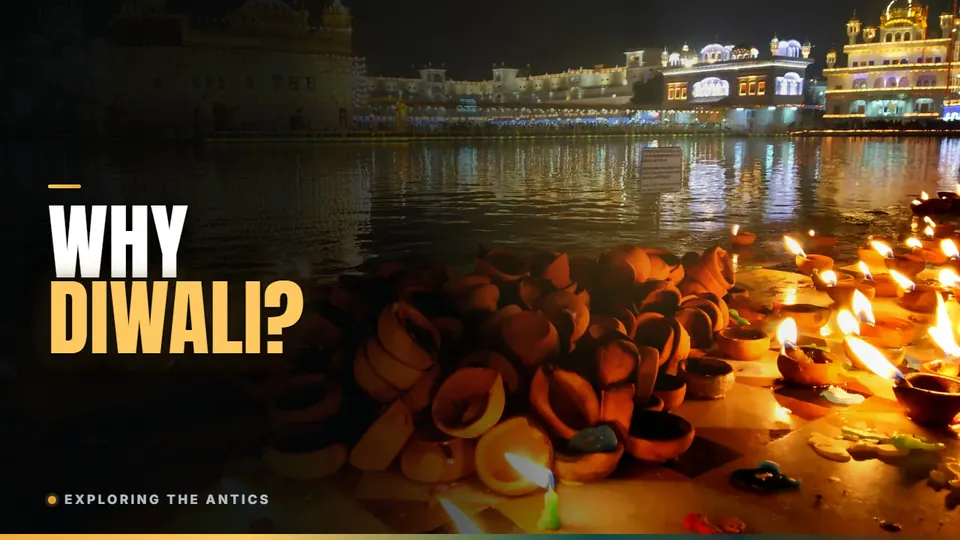
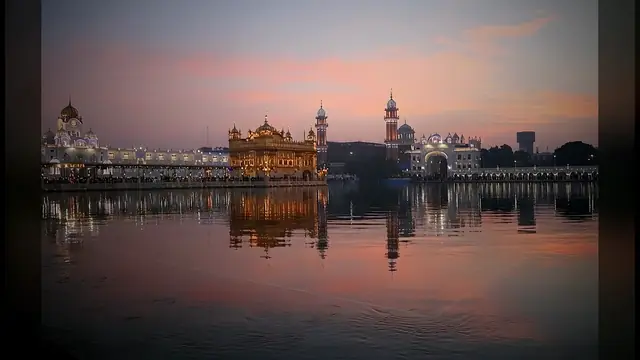
When the Guru reached Amritsar, Sikh tradition remembers, it was Diwali, and the Harmandir Sahib, today's Golden Temple, glowed with lamps to welcome him. Sikhs call this day Bandi Chhor Divas.
सिख परंपरा याद करती है कि जब गुरु जी अमृतसर पहुँचे, तो दिवाली थी, और हरमंदिर साहिब, आज का स्वर्ण मंदिर, उनके स्वागत में दीयों से जगमगा उठा। सिख इस दिन को बंदी छोड़ दिवस कहते हैं।
A washerwoman who chose honesty over gold. A Tirthankara whose light became every lamp. A Guru who would not walk free alone. Three lamps, one dark night, and every one of them lit against the dark.
एक धोबिन, जिसने सोने के ऊपर ईमानदारी चुनी। एक तीर्थंकर, जिनकी ज्योति हर दीया बन गई। एक गुरु, जो अकेले आज़ाद नहीं हुए। तीन दीये, एक अँधेरी रात, और हर दीया अँधेरे के विरुद्ध जला।
Tonight, when you light your lamp, light one more for honesty. May Goddess Lakshmi find your door open and your home bright, and may she never leave it. Happy Diwali to you and your family.
आज रात जब आप अपना दीया जलाएँ, तो एक दीया ईमानदारी के लिए भी जलाइए। माँ लक्ष्मी आपका द्वार खुला और घर उजला पाएँ, और कभी उसे न छोड़ें। आपको और आपके परिवार को दिवाली की हार्दिक शुभकामनाएँ।
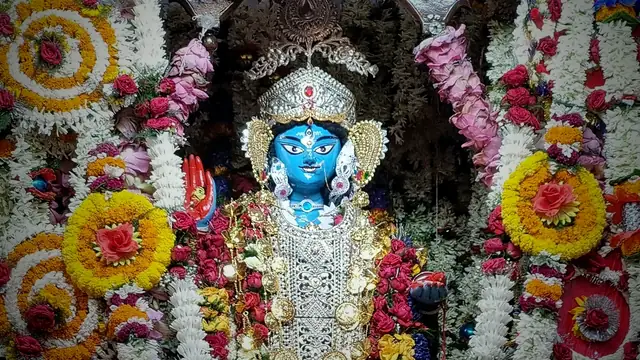
And tomorrow, in Bengal, this same dark night belongs to another mother, fierce and fearless. That is Kali's story.
और कल, बंगाल में, यही अँधेरी रात एक और माँ की है, उग्र और निर्भय। वो है माँ काली की कथा।