दिन में दो बार, ये मंदिर समुद्र में ग़ायब हो जाता है। कुछ घंटों में ये लौट आता है। श्रद्धालु कहते हैं, समुद्र शिव को स्नान कराता है। पर ज्वार-भाटा सीधी कहानी कहता है। ये है गुजरात का स्तंभेश्वर महादेव।
Twice a day, this temple disappears under the sea. A few hours later, it comes back. Devotees say the sea is bathing Lord Shiva. The tide tables tell a simpler story. This is Stambheshwar Mahadev, in Gujarat.

ये मंदिर गुजरात के भरूच ज़िले में, जंबूसर इलाक़े के कवि कंबोई गाँव में है। ये खंभात की खाड़ी के ठीक किनारे पर है, उस जगह के पास जहाँ माही नदी समुद्र से मिलती है। तीर्थयात्री इसे महीसागर संगम कहते हैं।
The temple stands at the village of Kavi Kamboi, in the Jambusar area of Bharuch district, in Gujarat. It sits right on the shore of the Gulf of Khambhat, near the place where the Mahi River meets the sea, a spot that pilgrims call the Mahisagar Sangam.
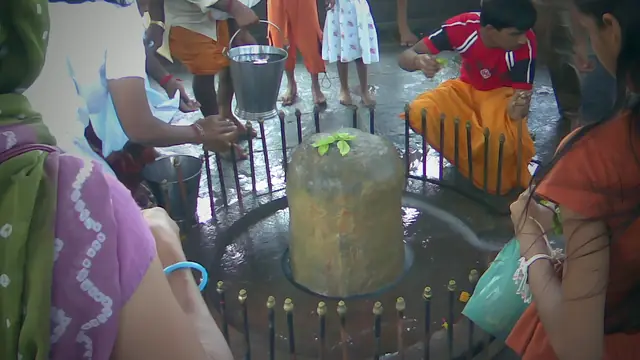
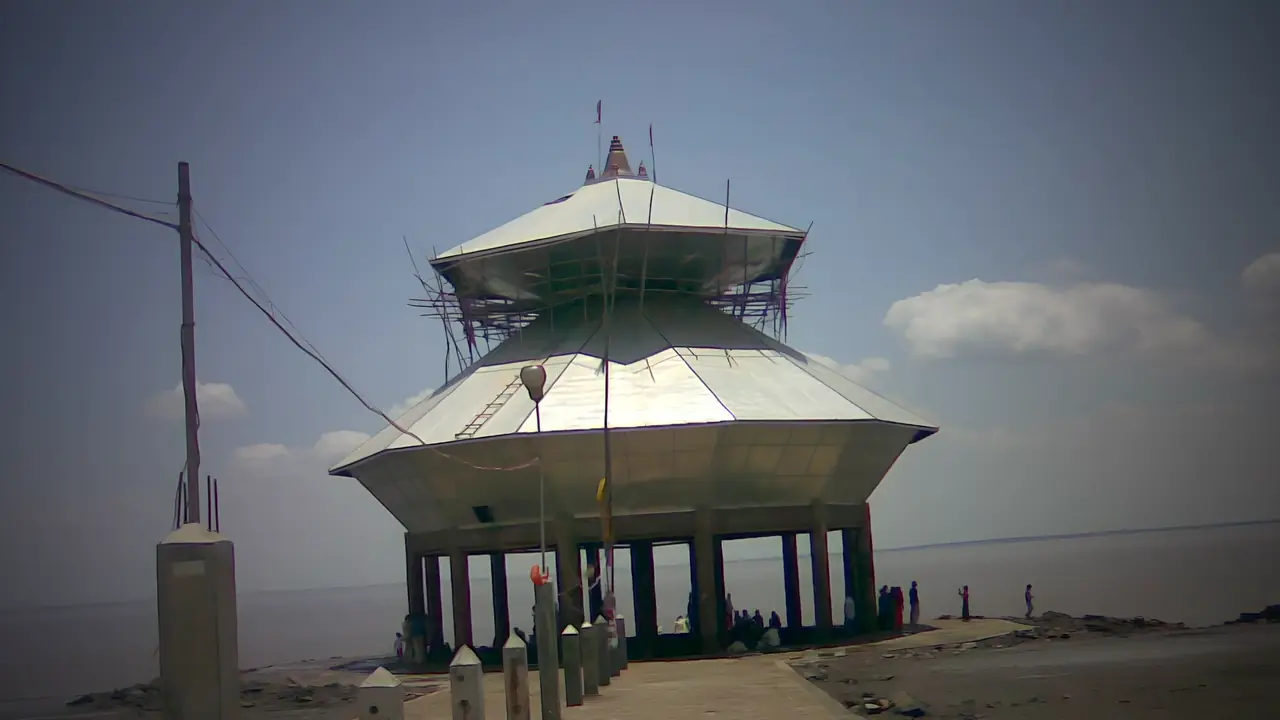
मंदिर अपने आप में बहुत सादा है। ना कोई ऊँचा प्रवेश-द्वार, ना नक्काशीदार भव्य मंडप। बीच में क़रीब चार फ़ुट ऊँचा शिवलिंग है, पानी के किनारे, एक छोटे से गर्भगृह में।
The shrine itself is simple. There is no towering gateway or grand carved hall. At its heart is a Shiva lingam about four feet high, standing in a small sanctum at the edge of the water.
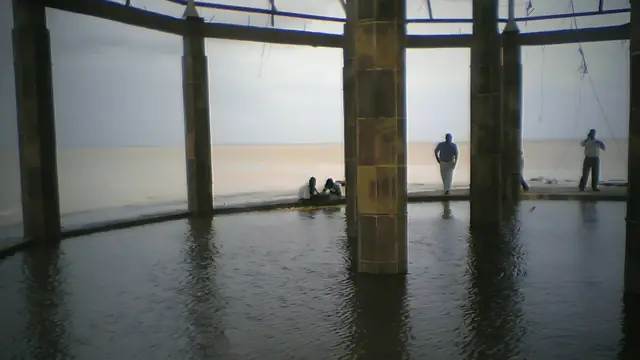
दिन में दो बार, ज्वार आने पर, समुद्र तेज़ी से अंदर आकर पूरा गर्भगृह ढक लेता है। कुछ देर, लहरों के ऊपर बस मंदिर का सबसे ऊपरी हिस्सा दिखता है। पानी उतरते ही शिवलिंग फिर दिखने लगता है, समुद्र से धुला हुआ।
Twice a day, at high tide, the sea rushes in and covers the sanctum entirely. For a while, only the very top of the temple can be seen above the waves. When the tide goes out, the lingam appears again, washed clean by the sea.
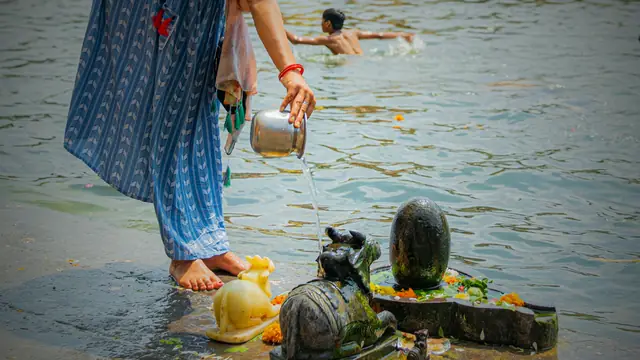
श्रद्धालु मानते हैं कि समुद्र ख़ुद, दिन में दो बार, शिवलिंग का अभिषेक करता है, यानी उसका पवित्र स्नान।
Devotees believe the sea itself is performing an abhishekam, the sacred bathing of Shiva's lingam, twice every day.

इस मंदिर की कथा स्कंद पुराण से आती है। भगवान शिव के योद्धा पुत्र कार्तिकेय ने, देवताओं की सेना लेकर, शक्तिशाली असुर तारकासुर से युद्ध किया, और उसे मार डाला।
The legend behind the temple comes from the Skanda Purana. Kartikeya, the warrior son of Lord Shiva, led the army of the gods against a mighty demon named Tarakasura, and killed him in battle.

पर जीत से कार्तिकेय को शांति नहीं मिली। तारकासुर असुर तो था, पर भगवान शिव का बड़ा भक्त भी था। अपने ही पिता के भक्त को मारने का दुख कार्तिकेय को सताने लगा।
But victory did not bring Kartikeya peace. Tarakasura, though a demon, had been a great devotee of Lord Shiva. Kartikeya was filled with sorrow for having killed one of his father's own devotees.
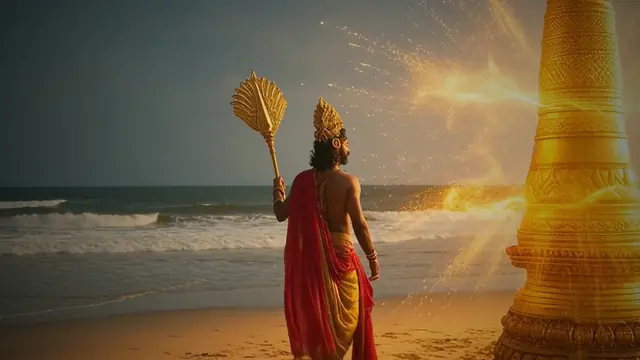
शांति पाने के लिए, मंदिर में दर्ज परंपरा के अनुसार, कार्तिकेय ने युद्ध की जगह पर एक पवित्र स्तंभ खड़ा किया, और पास में शिवलिंग स्थापित किए। उसी स्तंभ से नाम पड़ा स्तंभेश्वर, यानी स्तंभ के स्वामी।
To find peace, according to the tradition recorded at the temple, Kartikeya raised a sacred pillar, or stambha, at the place of the battle, and consecrated Shiva lingams nearby. From that pillar comes the name Stambheshwar, the Lord of the pillar.
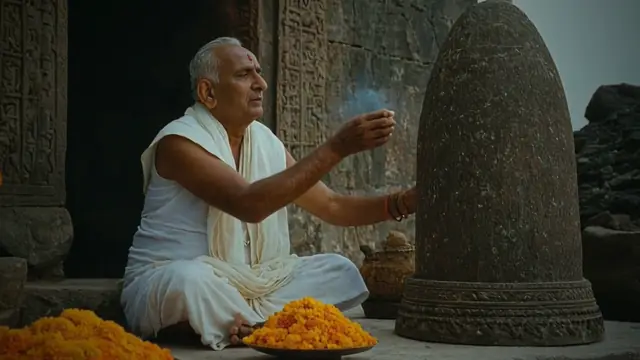
आज की मंदिर इमारत क़रीब डेढ़ सौ साल पुरानी मानी जाती है, हालाँकि श्रद्धालु कहते हैं कि यहाँ शिवलिंग की पूजा उससे कहीं पहले से होती आई है।
The present temple building is believed to be around one hundred and fifty years old, although devotees say the lingam has been worshipped here for far longer.
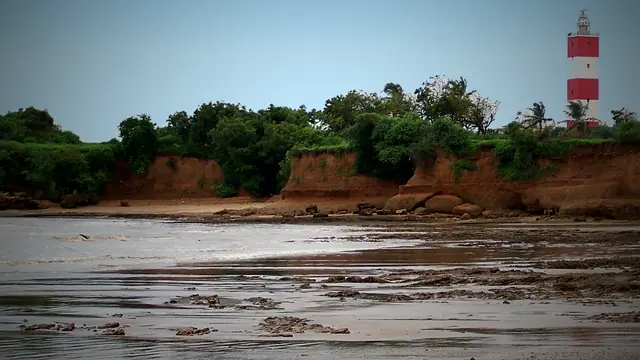
तो असल में मंदिर ग़ायब क्यों होता है? जवाब है, ख़ुद समुद्र। खंभात की खाड़ी में भारत के पूरे तट पर सबसे ऊँचे ज्वार आते हैं। बड़े ज्वार के दिनों में, यहाँ पानी क़रीब दस मीटर तक चढ़ता-उतरता है।
So what really makes the temple vanish? The answer is the sea itself. The Gulf of Khambhat has the highest tides anywhere on India's coastline. During spring tides, the water level here can rise and fall by around ten metres.
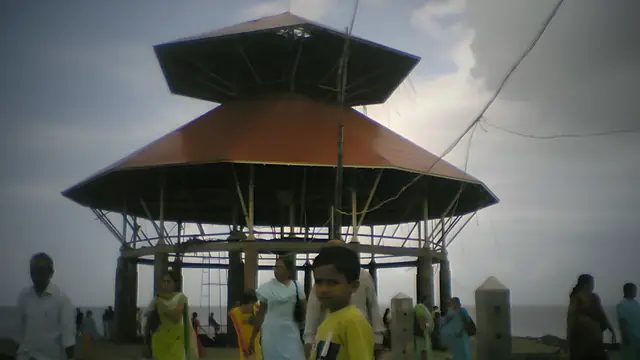
ज्वार रोज़ बदलता है, इसलिए मंदिर का समय भी रोज़ बदलता है। मंदिर ज्वार और भाटे का समय पहले से बताता है, ताकि तीर्थयात्री जानें कि कब शिवलिंग तक पैदल जा सकते हैं, और कब समुद्र के पीछे हटने का इंतज़ार करना है।
Because the tides change every day, so does the temple's schedule. The temple publishes the timings of high and low tide, so that pilgrims know when they can walk out to the lingam, and when they must wait for the sea to retreat.
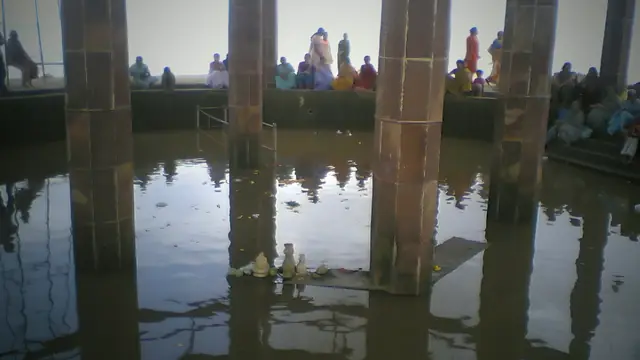
कई लोग पूरे ज्वार तक रुकते हैं, पानी को धीरे-धीरे मंदिर ढकते, और फिर लौटाते देखते हैं। पूर्णिमा और अमावस्या को, जब ज्वार सबसे तेज़ होते हैं, ख़ास तौर पर भारी भीड़ आती है।
Many visitors stay through an entire tide, watching the water slowly cover the temple, and then slowly give it back. Full moon and new moon days, when the tides are strongest, draw especially large crowds.
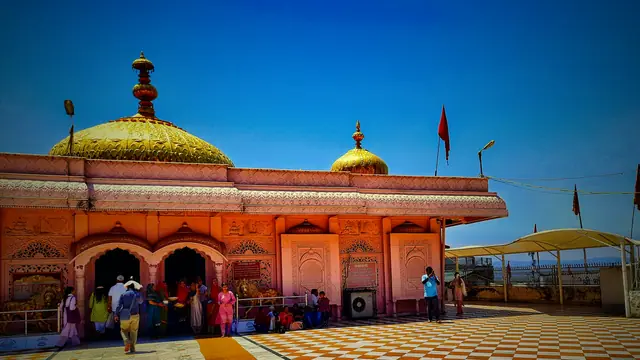
एक मंदिर, जिसे समुद्र दिन में दो बार नहलाता है।
A temple that the sea bathes twice a day. And next time, we go to the foothills of the Himalayas, to the Jwala Ji Temple, where flames burn from the rock, with no fuel that anyone can see.