एक माँ ने फिर से जन्म लिया, एक भयानक उद्देश्य के लिए: अपने ही पुत्र का अंत करने के लिए। और जिस रात उन्होंने ऐसा किया, उसी रात भारत दिवाली के पहले दीये जलाता है।
A mother was born again for one terrible purpose: to end the life of her own son. And on the night she did it, India lights the first lamps of Diwali.
ये है काली चौदस, दिवाली से पहले की रात। ज़्यादातर भारत इसे नरक चतुर्दशी, या छोटी दिवाली कहता है। इसे समझने के लिए हमें उस दिन लौटना होगा जब वो पुत्र जन्मा, और उस वरदान तक, जो एक दिन उसी के लिए लौटकर आया।
This is Kali Chaudas, the night before Diwali. Much of India calls it Narak Chaturdashi, or Choti Diwali. To understand it, we have to go back to the day that son was born, and to a promise that would one day come back for him.
हिंदू परंपरा में धरती एक देवी हैं, भूदेवी। बहुत पहले, असुर हिरण्याक्ष उन्हें खींचकर ब्रह्मांड के सागर की गहराइयों में ले गया। तब भगवान विष्णु ने एक विशाल वराह का रूप लिया, उस अँधेरे जल में उतरे, और अपने दाँतों पर उन्हें ऊपर उठा लाए।
In Hindu tradition, the Earth is a goddess, Bhudevi. Long ago, the demon Hiranyaksha dragged her down into the depths of the cosmic ocean. Lord Vishnu took the form of a mighty boar, Varaha, dived into the dark water, and lifted her up on his tusks.
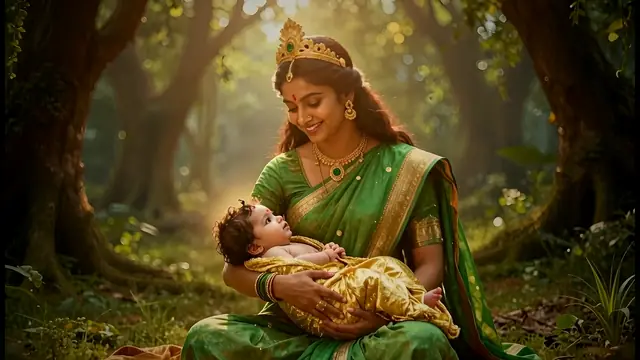
विष्णु पुराण कहता है कि उनके स्पर्श से भूदेवी को एक पुत्र हुआ। उसका नाम था नरक। वो धरती का पुत्र था, और स्वयं भगवान का भी। कोई सोच भी नहीं सकता था कि वो क्या बनेगा।
The Vishnu Purana says that from his touch, Bhudevi bore a son. His name was Naraka. He was the child of the Earth, and of the Lord himself. No one could have guessed what he would become.
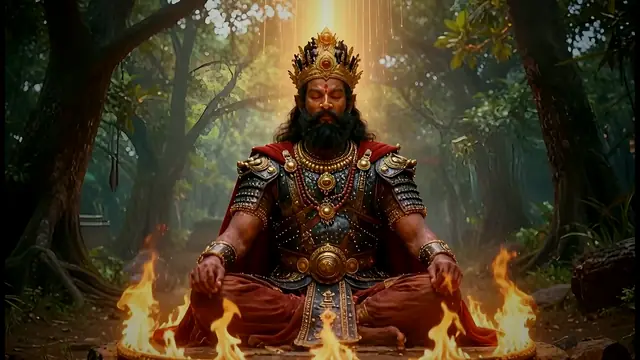
सबसे प्रचलित कथा में, नरक को ब्रह्मा जी से एक वरदान मिला। कोई देवता, कोई मनुष्य, कोई असुर उसे मार नहीं सकेगा। सारे लोकों में केवल एक ही उसे मार सकती थी। उसकी अपनी माँ। लगता था वो सदा जीवित रहेगा। पर हर वरदान में एक द्वार होता है, और ये द्वार रणभूमि में खुलने वाला था।
In the story most people tell, Naraka won a boon from Brahma. No god, no man, no demon could kill him. Only one person in all the worlds ever could. His own mother. It sounded like a promise that he would live forever. But every boon has a door, and this one would open on a battlefield.
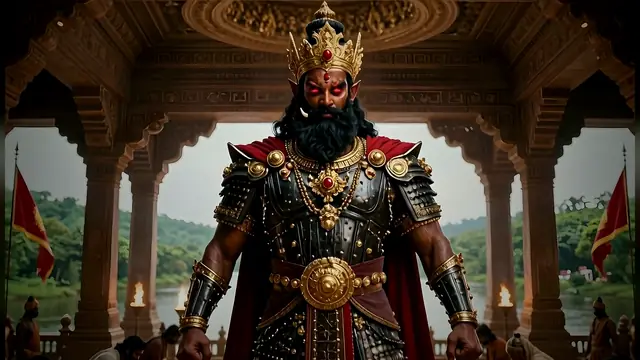
नरक प्राग्ज्योतिष का शक्तिशाली राजा बना, जिसे परंपरा आज के असम में मानती है। कालिका पुराण कहता है, शुरू में वो देवी कामाख्या का भक्त था। पर शक्ति ने उसे बदल दिया, और देवी ने उसका राज्य छोड़ दिया।
Naraka grew into a mighty king of Pragjyotisha, which tradition places in today's Assam. At first, the Kalika Purana says, he was a devoted follower of the goddess Kamakhya. But power changed him, and the goddess withdrew from his kingdom.
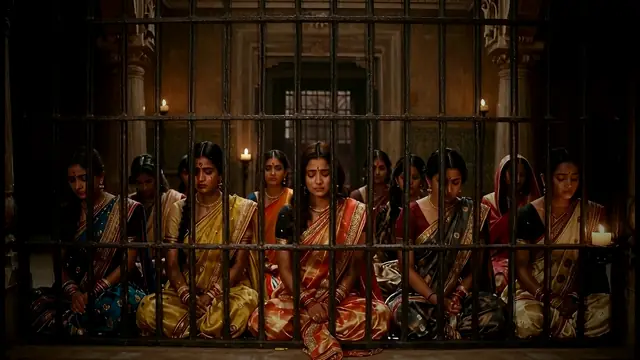
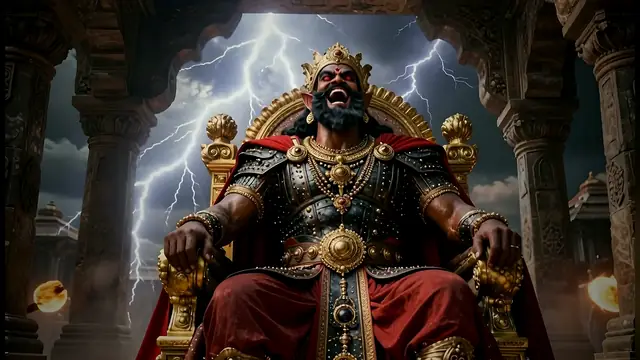
फिर आतंक शुरू हुआ। नरक देश भर के राजाओं से सोलह हज़ार राजकुमारियों और युवतियों को उठा ले गया, और उन्हें अपने महल में बंद कर दिया। उसने देवताओं की माता अदिति के दिव्य कुंडल तक छीन लिए। स्वर्ग भी काँप उठा, और कोई उसे रोक नहीं पा रहा था।
Then the terror began. Naraka carried off sixteen thousand princesses and young women from kings across the land, and locked them inside his palace. He even tore away the sacred earrings of Aditi, the mother of the gods. Heaven itself trembled, and no one could stop him.
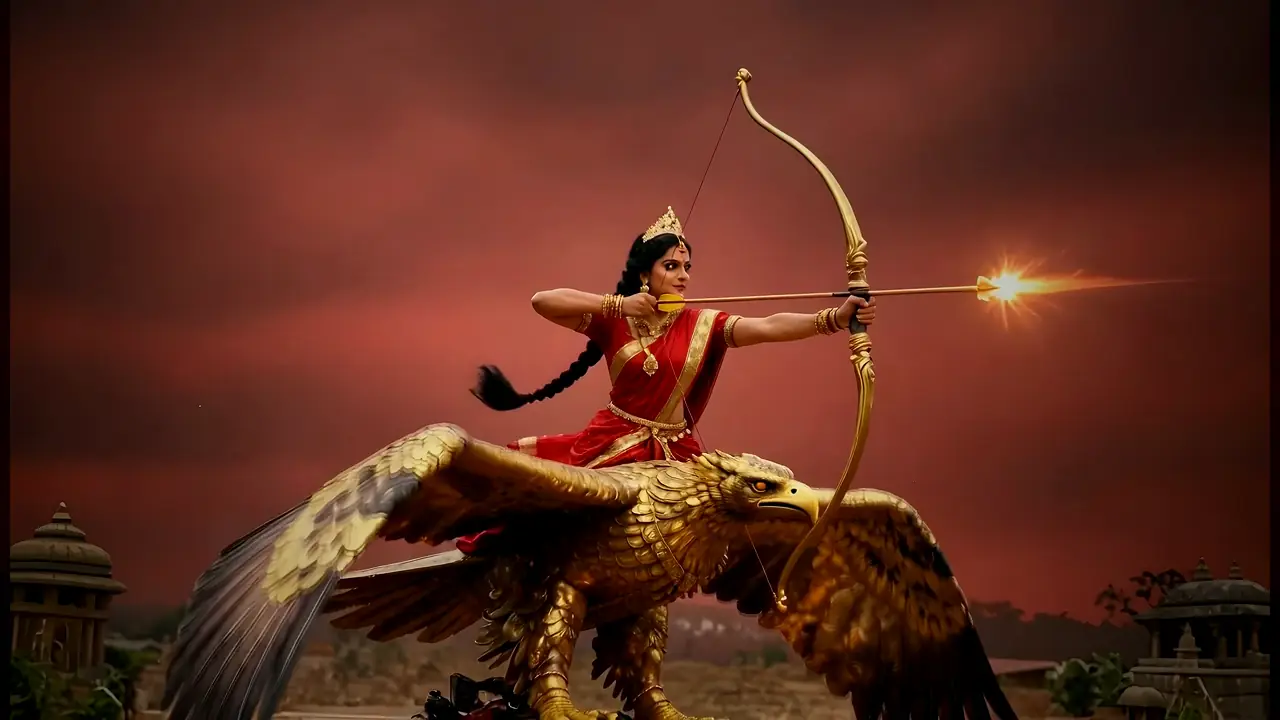
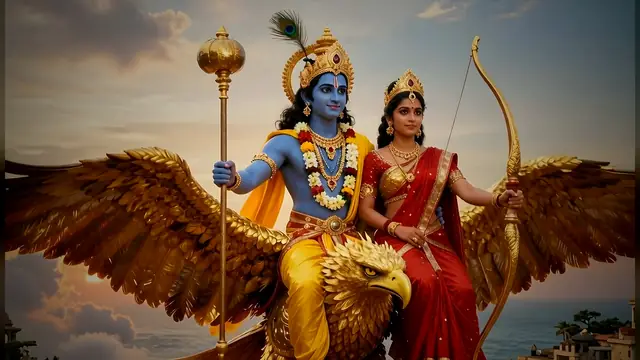
तब देवराज इन्द्र सहायता माँगने भगवान कृष्ण के पास आए। और कृष्ण अकेले नहीं गए। उन्होंने अपने महान गरुड़ को बुलाया, और उनके साथ उनकी रानी सत्यभामा भी चलीं। नरक नहीं जानता था कि कौन उसके लिए आ रहा है। और ये भी नहीं, कि कृष्ण के साथ कौन है।
So Indra, king of the gods, came to Lord Krishna for help. And Krishna did not go alone. He called his great eagle, Garuda, and beside him rode his queen, Satyabhama. Naraka did not know who was coming for him. And he did not know who was riding beside Krishna.
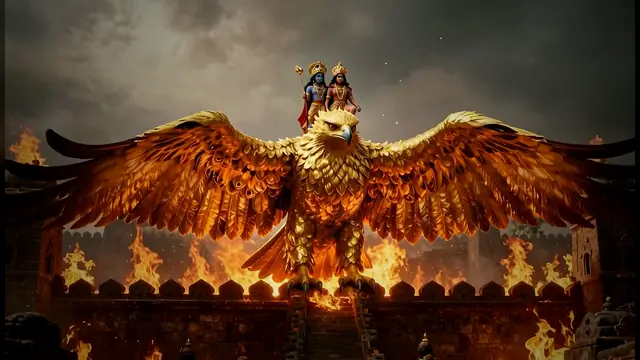
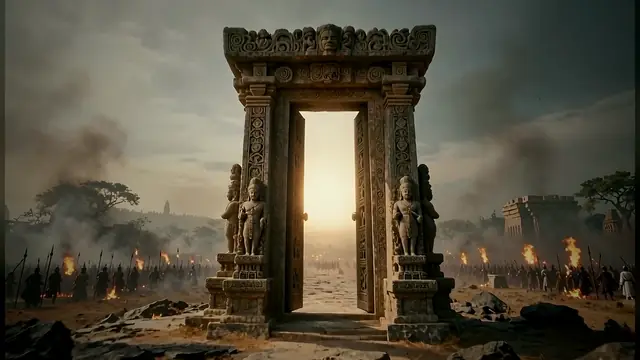
नरक की नगरी चारों ओर से पर्वतों, शस्त्रों, जल, अग्नि और वायु की दीवारों से घिरी थी। कृष्ण ने अपनी गदा, बाणों, तलवार और सुदर्शन चक्र से हर दीवार तोड़ दी।
Naraka's city was ringed by walls of mountains, of weapons, of water, fire and wind. Krishna broke through every one, with his gada, his arrows, his sword, and the Sudarshan Chakra.
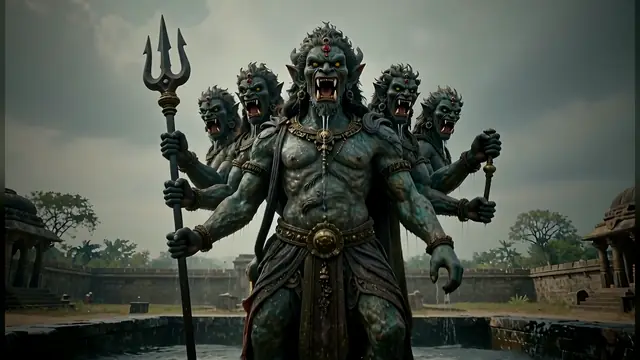
खाई में पहरेदार मुर सोया था, पाँच सिरों वाला असुर। कृष्ण के शंख की गर्जना से वो जागा, और त्रिशूल लेकर गरुड़ पर झपटा। सुदर्शन चक्र चमका, और उसके पाँचों सिर गिर गए। इसीलिए कृष्ण को आज भी मुरारि कहते हैं, मुर के शत्रु।
In the moat slept the guardian Mura, a demon with five heads. The blast of Krishna's conch woke him, and he charged at Garuda with a trident. The Sudarshan Chakra flashed, and all five heads fell. That is why Krishna is still called Murari, the enemy of Mura.
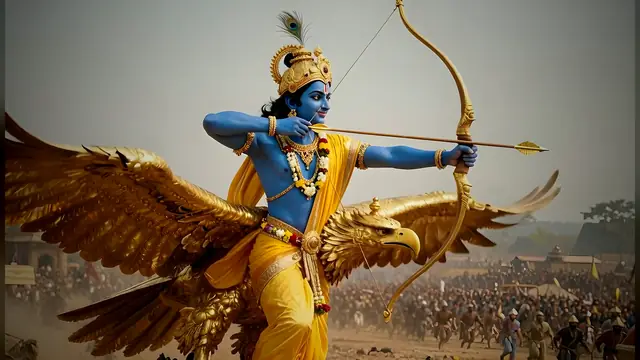
मुर के सात पुत्र बदला लेने दौड़े, अपने सेनापति पीठ के साथ, शस्त्रों का पहाड़ लेकर। कृष्ण के बाणों ने हर शस्त्र के टुकड़े कर दिए, और उनमें से कोई लौटकर नहीं गया।
Mura's seven sons rushed out to avenge him, led by their general, Pitha, with a mountain of weapons. Krishna's arrows cut every weapon to pieces, and not one of them returned.
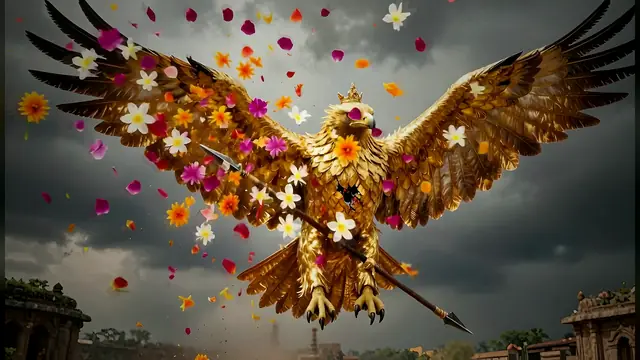
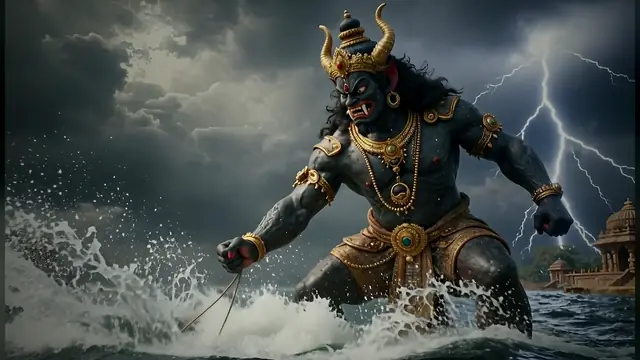
तब स्वयं नरक अपने हाथी पर निकला, और युद्ध से आकाश हिल उठा। उसने वो भाला फेंका, जिसने कभी इन्द्र के वज्र को भी हराया था। भाला गरुड़ को लगा, और भागवत कहता है, गरुड़ ज़रा भी नहीं हिले, जैसे हाथी पर फूलों की माला गिरी हो।
Then Naraka himself rode out on his elephant, and the battle shook the sky. He hurled a spear that had once defeated Indra's thunderbolt. It struck Garuda, and the Bhagavata says Garuda did not even flinch, like an elephant hit with a garland of flowers.
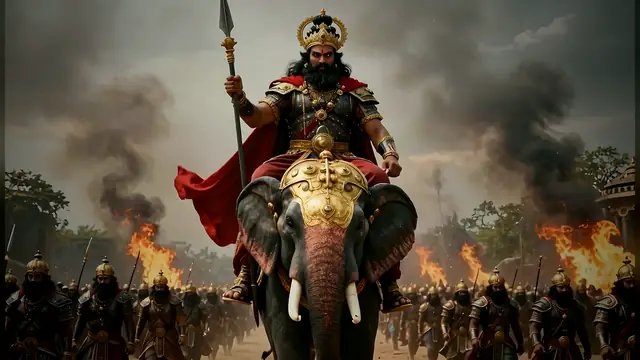
और यहीं सबसे प्रचलित कथा अपना सबसे अनोखा मोड़ लेती है। नरक का शस्त्र कृष्ण को लगा, और प्रभु गिर पड़े। कुछ कहते हैं वो मूर्छित हुए। कुछ कहते हैं उन्होंने बस अभिनय किया। जो भी हो, अब नरक उसी के सामने खड़ा था, जो उसका अंत कर सकती थी।
And this is where the story most people tell takes its strangest turn. Naraka's weapon struck Krishna, and the Lord fell. Some say he fainted. Some say he only pretended. Either way, Naraka now stood face to face with the one person who could end him.
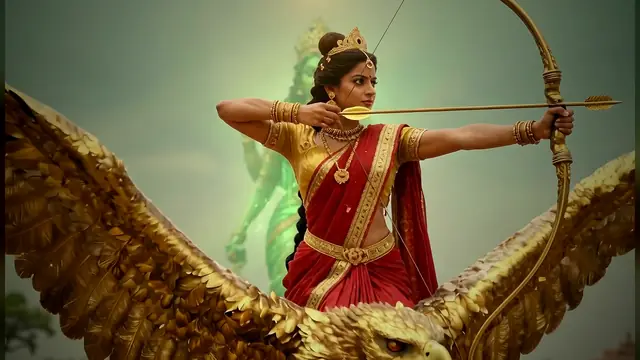
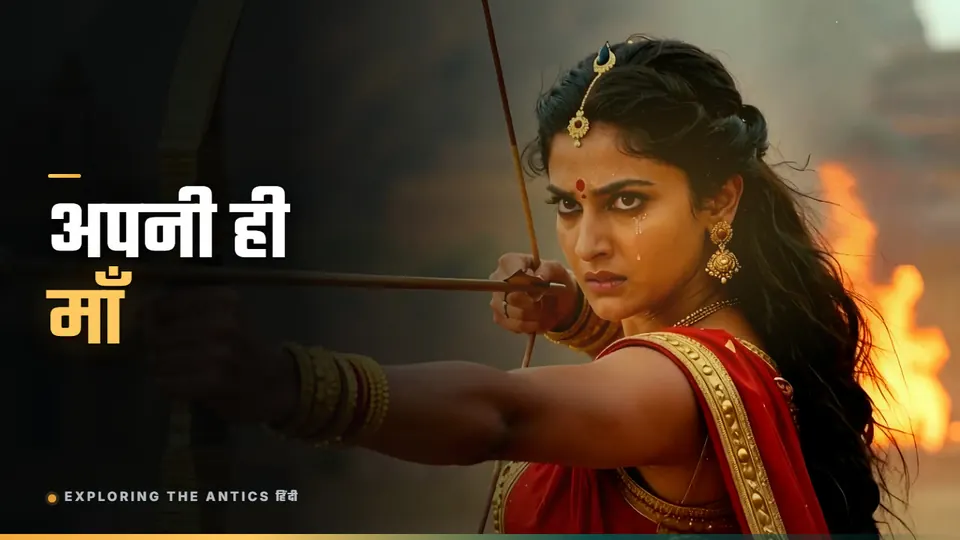
सत्यभामा ने अपने पति को गिरते देखा। क्रोध में उन्होंने धनुष उठाया। वो नहीं जानती थीं, जो देवता जानते थे, कि वो स्वयं भूदेवी हैं, कृष्ण की रानी बनकर फिर जन्मीं। उनका बाण चला, और नरक गिर पड़ा, अपनी माँ के हाथों।
Satyabhama saw her husband fall. In fury, she took up the bow. She did not know what the gods knew, that she was Bhudevi herself, born again as Krishna's queen. Her arrow flew, and Naraka fell, by his mother's hand.
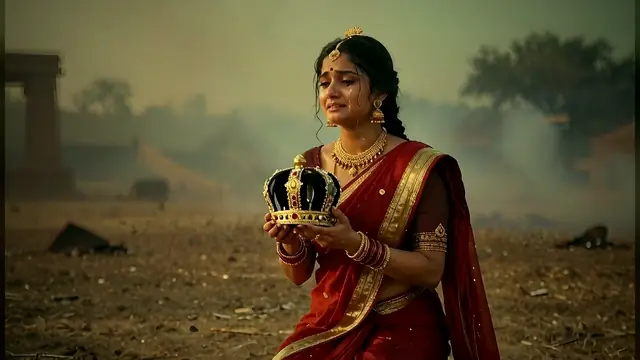
तब, कथा कहती है, सत्य प्रकट हुआ। एक माँ अपने पुत्र के पास बैठकर रो पड़ीं। और नरक ने मरते हुए एक अंतिम इच्छा माँगी। इस दिन को शोक से नहीं, बल्कि आनंद से याद किया जाए, और हर घर में दीयों से।
Then, the story says, the truth was revealed. A mother knelt beside her son and wept. And Naraka, dying, asked for one last thing. Let this day be remembered not with mourning, but with joy, and with lamps in every home.
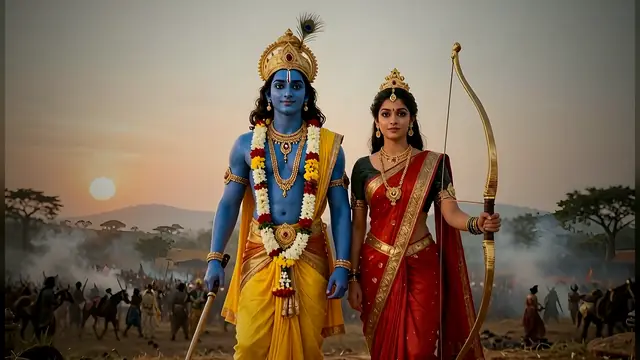
भागवत पुराण में, युद्ध कृष्ण के चक्र से समाप्त होता है, जब नरक अपने हाथी पर बैठा है। भक्त दोनों कथाओं को साथ मानते हैं। कृष्ण और सत्यभामा साथ खड़े थे, और अँधेरा गिर गया।
In the Bhagavata Purana, it is Krishna's chakra that ends the battle, as Naraka sits on his elephant. Devotees hold both tellings together. Krishna and Satyabhama stood side by side, and the darkness fell.
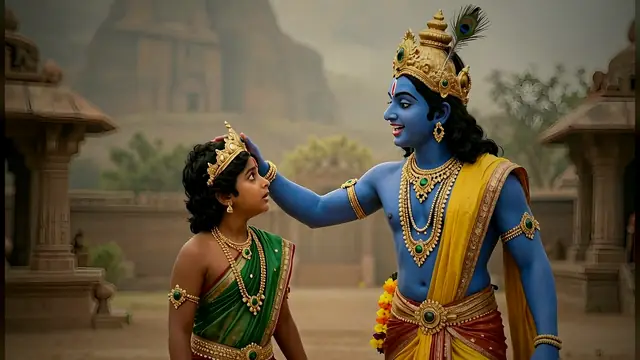
तब धरती देवी अदिति के कुंडल लेकर कृष्ण के पास आईं। वो नरक के छोटे, डरे हुए पुत्र को प्रभु के चरणों में लाईं। और भागवत कहता है, कृष्ण ने उस बालक को अभय दिया।
Then the Earth goddess came to Krishna, carrying Aditi's earrings. She brought Naraka's young son, frightened, to the Lord's feet. And Krishna, the Bhagavata says, gave the child his protection.
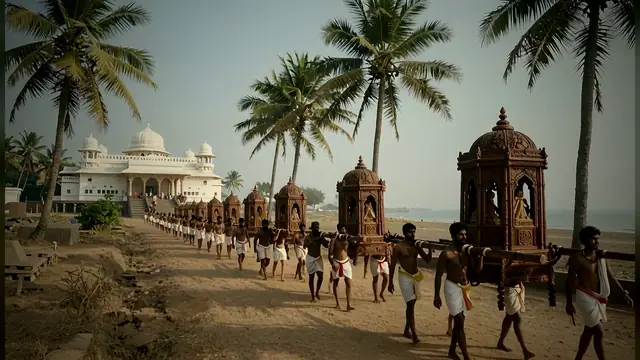
महल में कृष्ण को सोलह हज़ार बंदिनियाँ मिलीं। उन्होंने हर एक को मुक्त किया, नए वस्त्र दिए, और सम्मान के साथ द्वारका भेजा। और अदिति के कुंडल स्वर्ग लौट गए।
Inside the palace, Krishna found the sixteen thousand captives. He set every one of them free, dressed them in new clothes, and sent them to Dwaraka with honour. And Aditi's earrings went back to heaven.
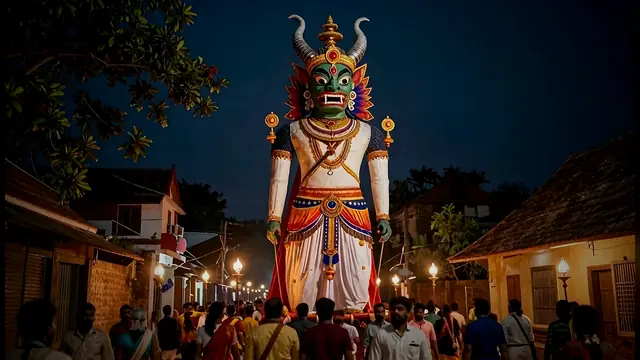
नरक की इच्छा आज भी निभाई जाती है। सूरज उगने से पहले, भारत भर के परिवार बालों में तेल लगाकर स्नान करते हैं, जैसे कहा जाता है कि युद्ध के बाद कृष्ण ने स्नान किया था। गोवा में, नरकासुर के विशाल पुतले रात भर गलियों में घुमाए जाते हैं, और भोर से पहले जला दिए जाते हैं।
Naraka's wish is kept to this day. Before sunrise, families across India rub oil into their hair and bathe, as Krishna is said to have bathed after the battle. In Goa, giant effigies of Narakasura are paraded through the streets all night, and burned before dawn.
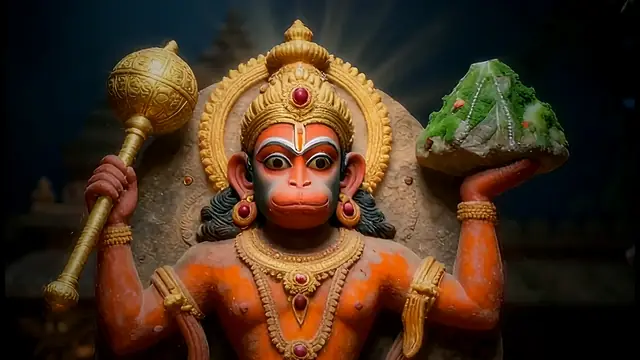
पर गुजरात में, इस रात का एक और रूप है, और वो डर से शुरू होता है। काली चौदस रक्षा की रात है, जब माना जाता है कि बुराई सबसे पास होती है। परिवार महाकाली की पूजा करते हैं, वो उग्र माँ जो बुराई का नाश करती हैं, और हनुमान जी की शरण लेते हैं, उन्हें तेल और सिंदूर चढ़ाते हैं, ताकि घर को कोई अँधेरा न छुए।
But in Gujarat, this night has another face, and it begins with fear. Kali Chaudas is a night of protection, when evil is believed to be closest. Families worship Mahakali, the fierce mother who destroys evil, and they turn to Lord Hanuman, offering him oil and sindoor, so that no darkness touches the home.
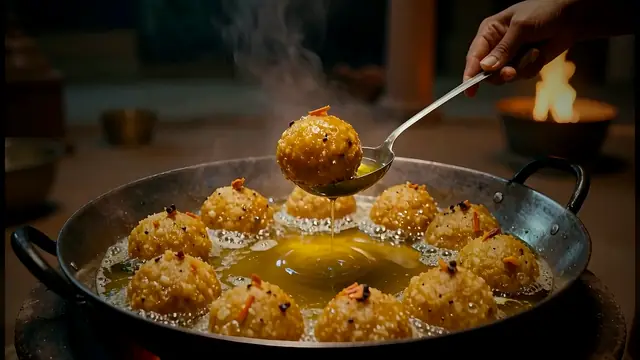
और एक रिवाज़ आज भी बहुत से गुजराती परिवार निभाते हैं। कुछ वड़े तले जाते हैं, अँधेरा होने के बाद चौराहे पर ले जाकर रख दिए जाते हैं, ताकि घर की बुरी नज़र दूर चली जाए। रक्षा के लिए आँखों में काजल लगाया जाता है। और तभी दिवाली के पहले दीये जलाए जाते हैं।
And there is a custom many Gujarati families still keep. A few vadas are fried and carried to the crossroads after dark, and left there, to carry the evil eye away from the house. Kajal is put in the eyes for protection. Only then are the first lamps of Diwali lit.
एक माँ का दुख, एक पुत्र की अंतिम इच्छा, और एक रात जो बुराई को दूर रखती है। भगवान कृष्ण, सत्यभामा, महाकाली और हनुमान जी आपके घर की रक्षा करें। आपको काली चौदस और छोटी दिवाली की हार्दिक शुभकामनाएँ।
A mother's sorrow, a son's last wish, and a night that keeps evil away. May Lord Krishna, Satyabhama, Mahakali and Hanuman ji protect your home. Happy Kali Chaudas, and a very happy Choti Diwali.