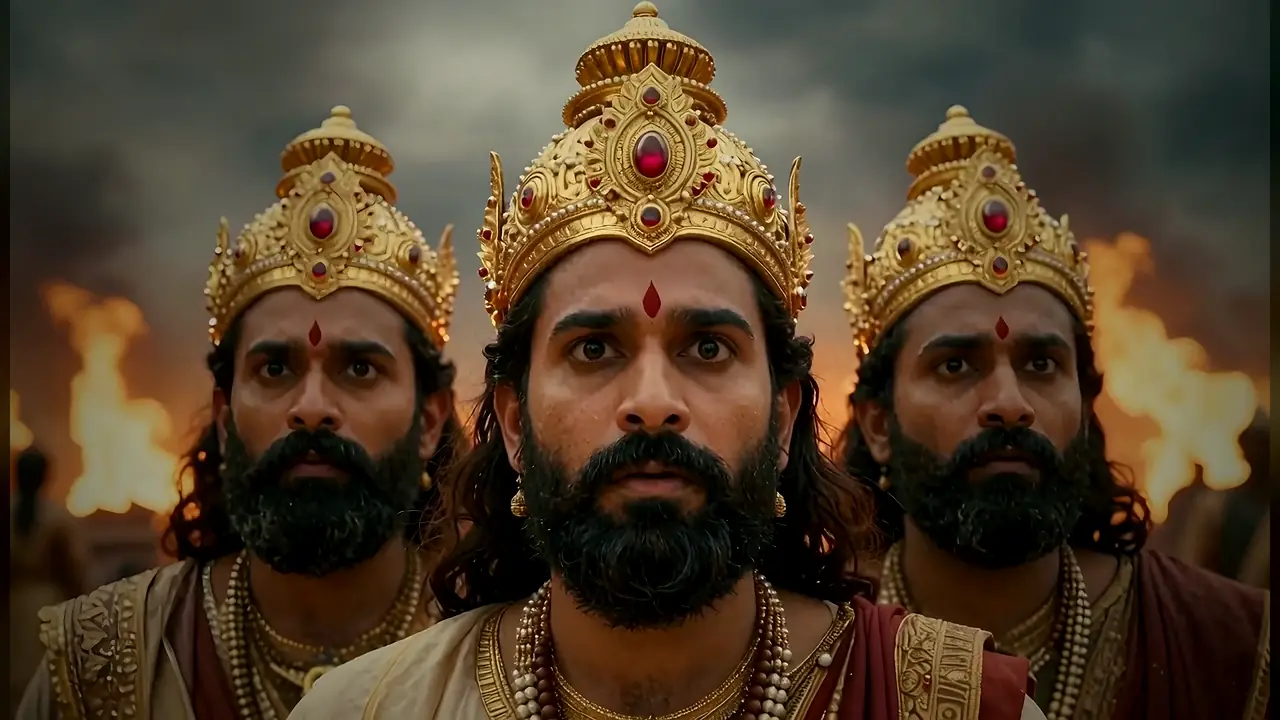
एक बार, एक रणभूमि में, तीनों लोकों में कोई उन्हें रोक नहीं पा रहा था। न असुर। न देवता भी। तब ब्रह्मांड के स्वामी, भगवान शिव, उनके मार्ग में लेट गए।
Once, on a battlefield, nothing in the three worlds could stop her. Not the demons. Not even the gods. So Lord Shiva, the Lord of the universe, lay down in her path.
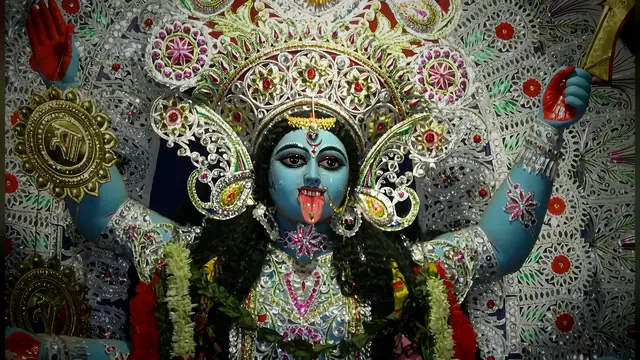
दिवाली की, साल की सबसे अँधेरी रात, जब भारत माँ लक्ष्मी का स्वागत करता है, बंगाल आधी रात तक उनके लिए जागता है। माँ काली। यही है काली पूजा। और यह समझने के लिए कि उनका चरण भगवान शिव पर क्यों है, हमें उस युद्ध तक लौटना होगा, जिसमें उनका प्राकट्य हुआ।
On Diwali night, the darkest night of the year, while India welcomes Lakshmi, Bengal stays awake until midnight for her. Maa Kali. This is Kali Puja. And to understand why her foot rests on Shiva, we have to go back to the battle where she was born.
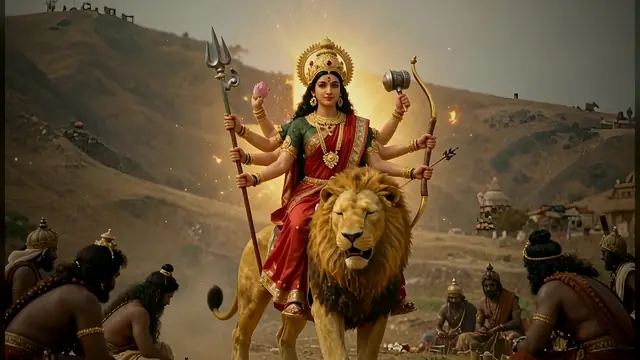
देवी माहात्म्य, यानी देवी की महिमा, यह कथा कहता है। दो असुर राजाओं, शुंभ और निशुंभ ने देवताओं से तीनों लोक छीन लिए थे। देवताओं ने प्रार्थना की, और महादेवी प्रकट हुईं। शास्त्र उन्हें अंबिका और चंडिका कहता है। आज करोड़ों लोग उन्हें माँ दुर्गा कहते हैं।
The Devi Mahatmya, the Glory of the Goddess, tells this story. Two demon kings, Shumbha and Nishumbha, had taken the three worlds from the gods. The gods prayed, and the great Goddess came to them. The scripture calls her Ambika and Chandika. Millions today know her as Durga.
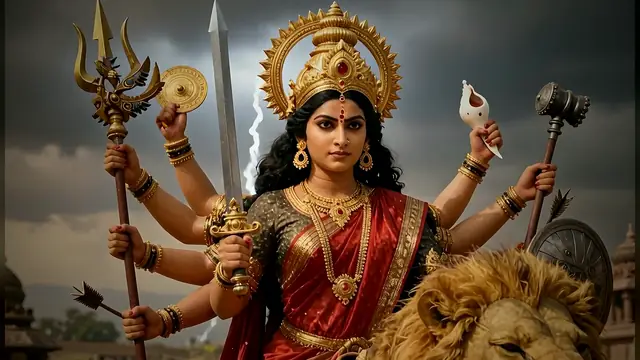
असुर राजाओं ने अपने दो भयंकर सेनापतियों, चंड और मुंड को, एक विशाल सेना के साथ देवी को पकड़ने भेजा। जब देवी ने उन्हें आते देखा, तो क्रोध से उनका मुख स्याही की तरह काला पड़ गया।
The demon kings sent two of their fiercest generals, Chanda and Munda, with a great army to capture her. When the Goddess saw them coming, her face grew dark as ink with anger.
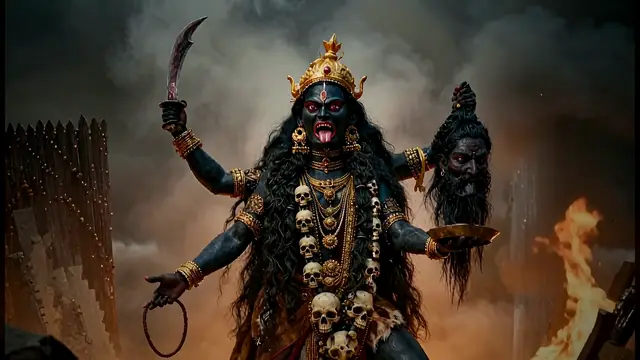
उनके तनी भौंहों वाले ललाट से एक और देवी प्रकट हुईं। माँ काली। हाथों में खड्ग और पाश, मुंडों की माला, कमर पर बाघ की खाल, बाहर निकली जिह्वा, और लाल धधकती आँखें। उनकी गर्जना से रणभूमि गूँज उठी।
And from her frowning forehead sprang another goddess. Kali. A sword and a noose in her hands, a garland of skulls, a tiger skin around her, her tongue lolling, and eyes burning red. Her roar filled the battlefield.
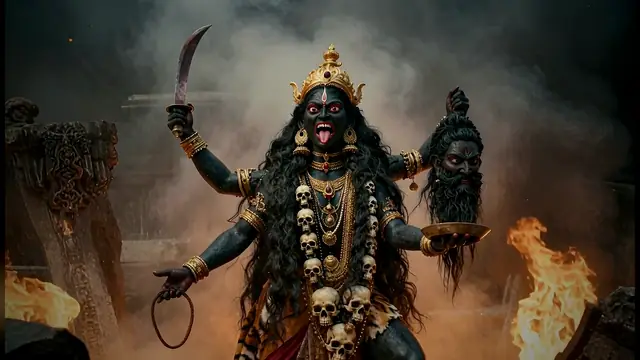
शास्त्र कहता है कि असुरों की सेना उनके सामने टिक न सकी। माँ काली ने चंड और मुंड का संहार किया, और उनके सिर देवी के पास लाईं। प्रसन्न देवी ने उन्हें नया नाम दिया। चामुंडा, यानी चंड और मुंड को जीतने वाली।
The scripture says the demon army could not stand before her. She cut down Chanda and Munda, and carried their heads to the Goddess. Pleased, the Goddess gave her a new name. Chamunda, the one who conquered Chanda and Munda.
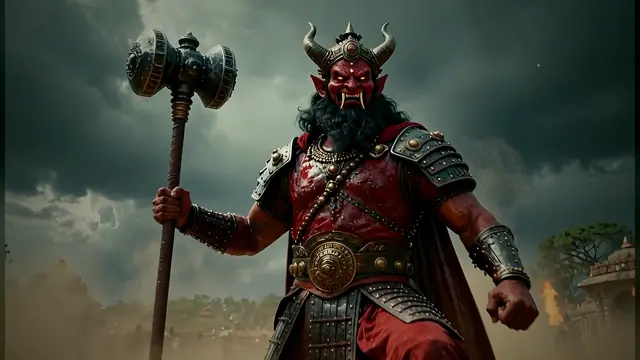
फिर आया सबसे अनोखा शत्रु। उसका नाम था रक्तबीज, यानी रक्त का बीज।
Then came the strangest enemy of all. His name was Raktabija, which means blood seed.
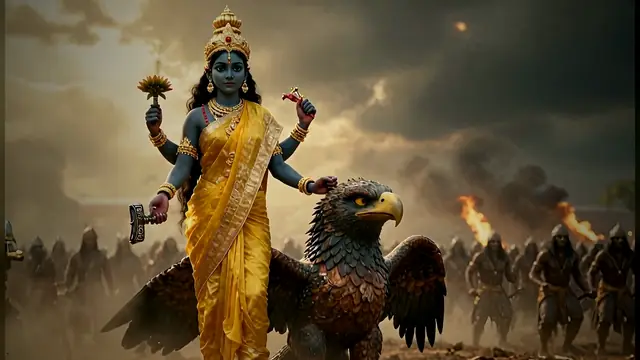
जब असुरों की सेनाएँ फिर से चढ़ आईं, तो स्वयं देवताओं की शक्तियाँ देवी के साथ लड़ने आगे आईं, हर शक्ति अपने देवता के रूप में। हंस पर ब्राह्मणी। त्रिशूल लिए, बैल पर माहेश्वरी। मोर पर कौमारी। गरुड़ पर वैष्णवी। और इंद्र का वज्र लिए, हाथी पर ऐंद्री। शास्त्र इन्हें मातृकाओं का दल कहता है।
As the demon armies marched again, the powers of the gods themselves came forward to fight beside the Goddess, each in the form of her own god. Brahmani on a swan. Maheshvari on a bull, with a trident. Kaumari on a peacock. Vaishnavi on Garuda. Aindri on an elephant, with Indra's thunderbolt. The scripture calls them the band of Mothers.
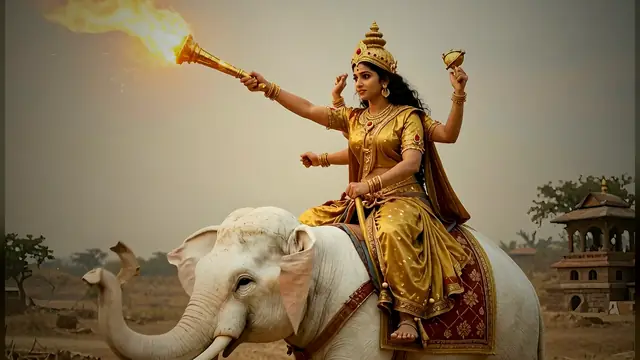
तब रक्तबीज आगे बढ़ा। ऐंद्री ने उस पर वज्र से प्रहार किया। उसके रक्त की एक बूँद धरती पर गिरी, और उससे उसी जैसा एक और असुर उठ खड़ा हुआ। उतना ही ऊँचा। उतना ही बलवान। उतना ही वीर।
Then Raktabija stepped forward. Aindri struck him with the thunderbolt. A drop of his blood fell to the earth, and from that drop rose another demon, just like him. As tall. As strong. As brave.
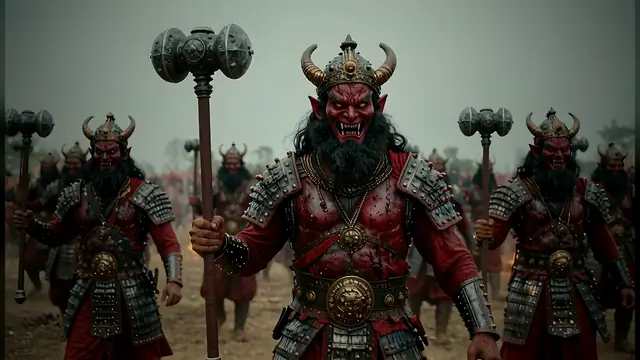
हर शस्त्र जो उसे घायल करता, उसे और बढ़ा देता। हर बूँद एक असुर बन जाती। देखते ही देखते हज़ारों रक्तबीज हो गए, और शास्त्र कहता है कि पूरा संसार उनसे भर गया। और देवता भय से काँप उठे।
Every weapon that wounded him made more of him. Every drop became a demon. Soon there were thousands of him, and the scripture says the whole world was filled with them. And the gods were filled with terror.
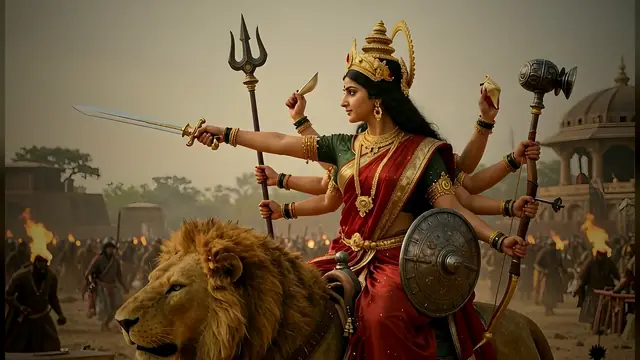
तब देवी ने माँ काली की ओर देखा। चामुंडा, उन्होंने कहा, अपना मुख फैलाओ।
Then the Goddess turned to Kali. Chamunda, she said, open your mouth wide.
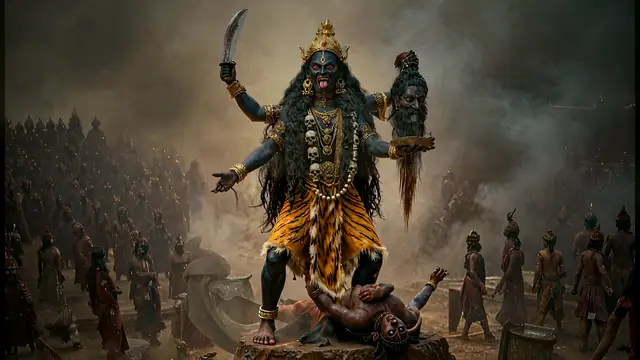
माँ काली पूरी रणभूमि में घूमीं, और एक भी बूँद धरती को छूने से पहले उन्होंने उसका रक्त पी लिया, और उससे उठे हर असुर को निगल लिया। अब एक भी नया असुर उठ न सका। फिर देवी ने अपने शस्त्रों से रक्तबीज पर प्रहार किया, और जिस असुर का रक्त एक सेना बन गया था, वह अंत में गिर पड़ा। देवताओं के आनंद की कोई सीमा न रही, और मातृकाओं का दल नाच उठा।
Kali roamed the battlefield and drank his blood before a single drop could touch the earth, and she devoured every demon that had risen from it. Not one new demon could rise. Then the Goddess struck Raktabija with her weapons, and the demon whose blood had become an army finally fell. The joy of the gods had no limit, and the band of Mothers broke into a dance.
शास्त्र में यह युद्ध यहीं पूरा होता है। पर बंगाल में यह कथा एक और प्रसंग के साथ सुनाई जाती है, और यही वह क्षण है, जो बंगाल की काली प्रतिमाओं में दिखता है।
That is where the scripture ends this battle. But in Bengal, the story is told with one more part, and it is the moment Bengal's images of Kali show.
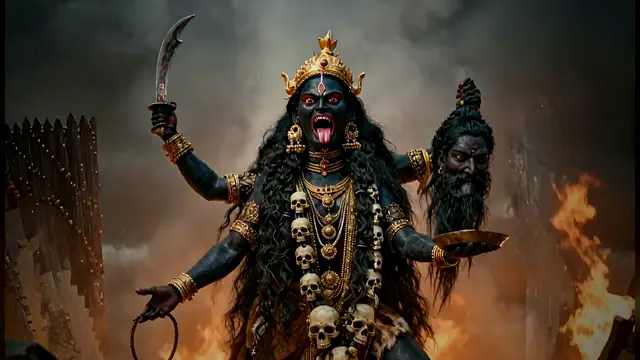
बंगाल की परंपरा कहती है, युद्ध के बाद भी माँ का क्रोध शांत नहीं हुआ। देवता संसार के लिए चिंतित हो उठे। तब वे भगवान शिव के पास गए।
After the battle, Bengal's tradition says, her fury would not stop. The gods were afraid for the worlds. So they went to Lord Shiva.
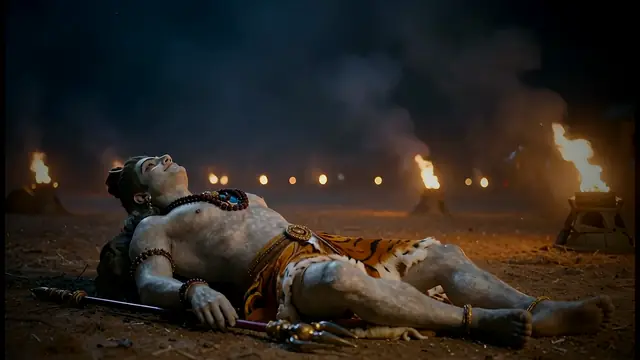
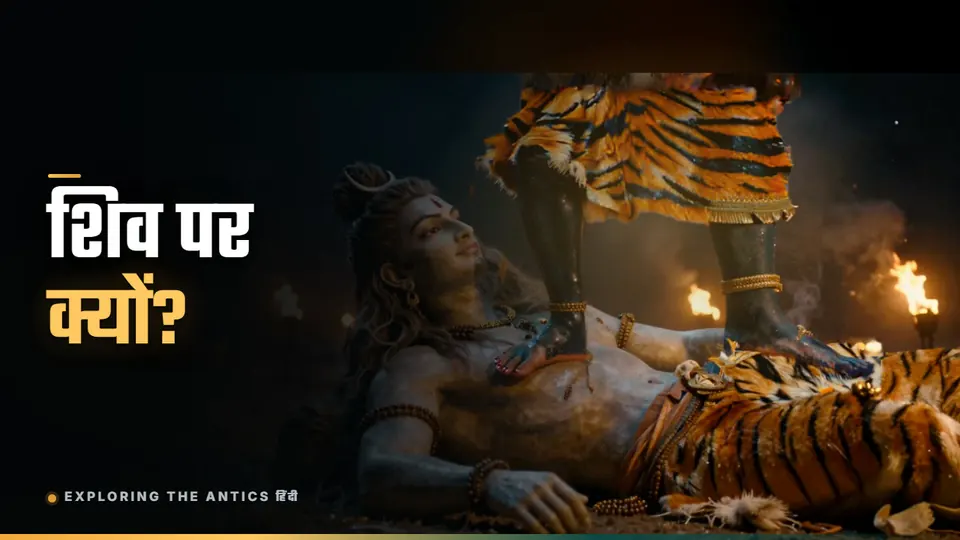
और ब्रह्मांड के स्वामी ने कोई शस्त्र नहीं उठाया। वे चुपचाप उनके मार्ग में लेट गए।
And the Lord of the universe did not raise a weapon. He lay down quietly in her path.
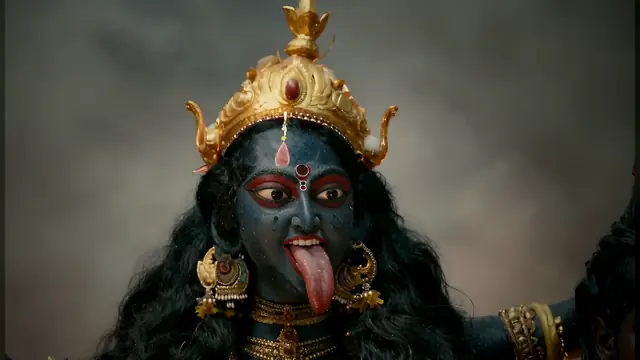
माँ का चरण उनके वक्ष पर पड़ा। उन्होंने नीचे देखा, और पहचाना। उनके अपने प्रिय स्वामी। उसी क्षण क्रोध शांत हो गया। उन्होंने जीभ दाँतों तले दबा ली, और असुर-संहारिणी फिर से माँ बन गईं।
Her foot fell on his chest. She looked down, and saw who lay beneath her. Her own beloved Lord. In that moment her fury left her. She bit her tongue, and the destroyer of demons became the Mother again.
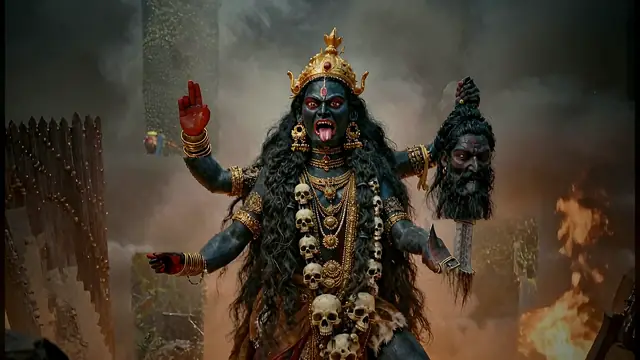
यही काली बंगाल में पूजी जाती हैं। दक्षिणा काली। चरण भगवान शिव पर, जीभ दाँतों तले, बाएँ हाथों में खड्ग और कटा सिर, दाएँ हाथों में दो आशीर्वाद। एक कहता है, डरो मत। दूसरा संतानों को वह देता है, जो वे माँगें।
That is the Kali that Bengal worships. Dakshina Kali. Her foot on Shiva, her tongue between her teeth, a sword and a severed head in her left hands, and in her right hands, two blessings. One says, fear not. The other gives her children what they ask.
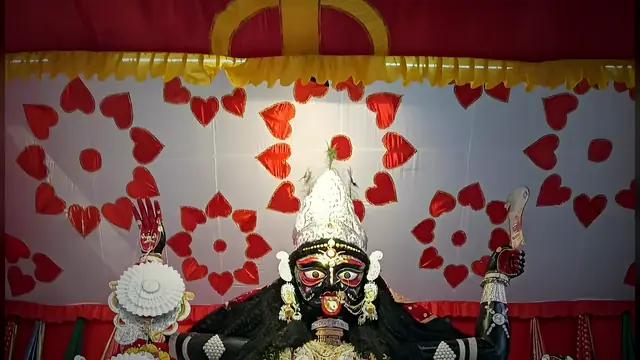
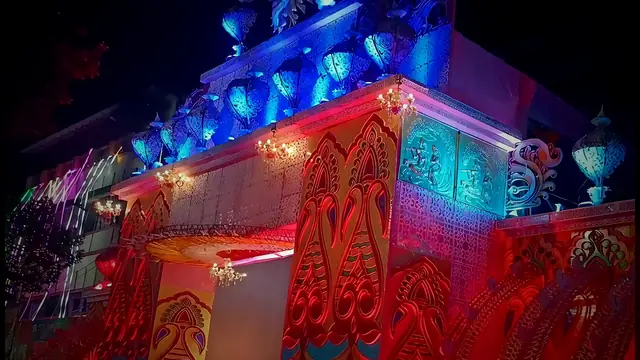
इसलिए कार्तिक की सबसे अँधेरी रात, बंगाल सोता नहीं। आधी रात को पूजा शुरू होती है, कालीघाट में, गंगा किनारे दक्षिणेश्वर में, और पूरे बंगाल के पंडालों में। उनका प्रिय फूल, लाल गुड़हल, उनके चरणों में अर्पित होता है, और उनके सामने दीये जलाए जाते हैं।
So on the darkest night of Kartika, Bengal does not sleep. At midnight the worship begins, at Kalighat, at Dakshineswar by the Ganga, and in pandals across Bengal. Red hibiscus, her favourite flower, is offered at her feet, and lamps are lit before her.
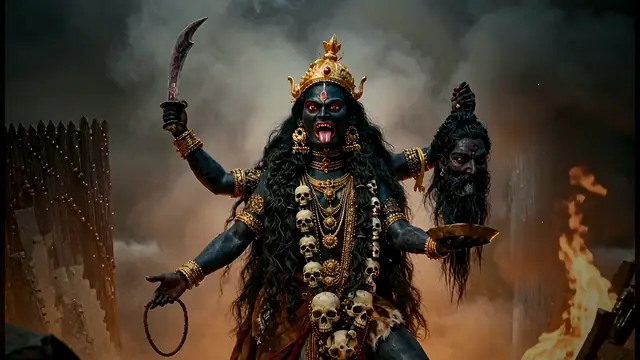
असुर उनसे सबसे ज़्यादा डरते थे। उनकी संतानें उनसे सबसे कम डरती हैं। क्योंकि माँ का क्रोध सिर्फ़ उसी पर होता है, जो उसके बच्चे को हानि पहुँचाए।
The demons feared her more than anyone. Her children fear her least of all. Because a mother's anger is only ever for what would harm her child.
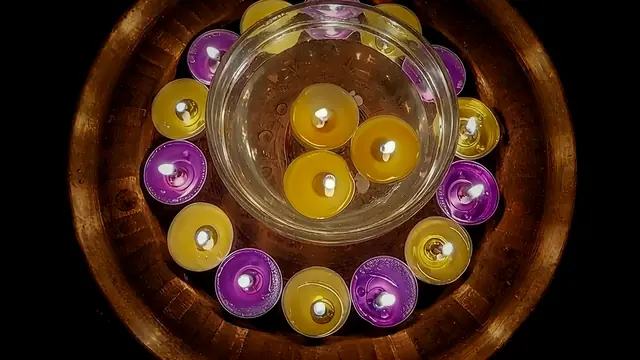
अगली बार जब आप दीया जलाएँ, तो माँ से बस एक वरदान माँगिए। निर्भयता। माँ काली आपकी और आपके परिवार की रक्षा करें। शुभो काली पूजा, और दिवाली की हार्दिक शुभकामनाएँ।
The next time you light a lamp, ask the Mother for just one gift. No fear. May Maa Kali protect you and your family. Shubho Kali Puja, and a very happy Diwali.
कल: एक बालक, एक पर्वत, और सात दिन का तूफ़ान। यह है गोवर्धन की कथा।
Tomorrow: a child, a mountain, and seven days of storm. That is Govardhan's story.